Micieli-Voutsinas, Jacque Editor
Biography not available.

Browse all FOLKLORE books
Browse all GARDENS books
Browse all GRAPHIC NOVELS books
Browse all HISTORY - MEDIEVAL books
Browse all HUMOUR books
Browse all Juvenile Fiction : Biographical - Other books
Browse all Juvenile Fiction : Historical - Other books
Browse all Juvenile Fiction : Legends, Myths, & Fables - Other books
Browse all Juvenile Fiction : People & Places - Other books
Browse all Juvenile Fiction : People & Places - United States - Other books
Browse all Juvenile Fiction : Religious - Other books
Browse all Juvenile Nonfiction : History - Other books
Browse all Juvenile Nonfiction : Mathematics - Advanced books
Browse all Juvenile Nonfiction : People & Places - Other books
Browse all Juvenile Nonfiction : People & Places - United States - Othe books
Browse all LITERARY STUDIES books
Browse all LONDON books
Browse all Medical : Nursing - Mental Health books
Browse all MIND books
Browse all MUSEOLOGY books
Browse all NON-CLASSIFIABLE books
Browse all NONLINEAR SCIENCE books
Browse all POPULAR SCIENCE books
Browse all RELIGIOUS STUDIES books
Browse all SPIRIT books
Browse all SPORT books
Browse all TRAVEL WRITING books
 Out of Stock
Paperback · ISBN 9780367547134
Inclusive of GST and other taxes
Arriving at your doorstep in 10-15 days
Our logisitcs team will make sure everyitem is delivered safely
| ISBN | 9780367547134 |
|---|---|
| Publisher | Routledge |
| Publication date | April 2022 |
| Language | English |
| MRP | £46.99 GBP |
| Page count | 306 |
| Item weight | 95 g |
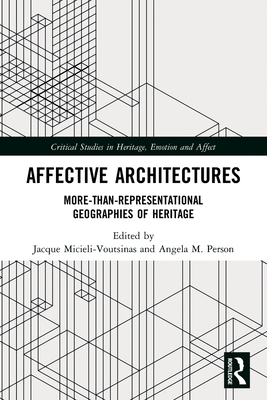
How do places manipulate our emotions? How are spaces affectious in their articulation and design? This book provides theoretical frameworks for exploring affective dimensions of architectural sites based on the notion that heritage, as an embodied experience, is embedded in places and spaces.
Drawing together an interdisciplinary collection of essays spanning geographically diverse architectural sites -- including Ford's Theater, the site of President Lincoln's assassination; the Estadio Nacional of Santiago, Chile, where 12,000 detainees were held following the ouster of President Salvador Allende; and Unit 731, the site of a biological and chemical warfare research unit of the Imperial Japanese army in Harbin, China, amongst others -- this edited collection assembles critical dialogue amongst scholars and practitioners engaging in affective and other more-than-representational approaches to cultural memory, heritage, and identity-making. Broken into three main sections: Affective Politics; Embedded Geographies; and Affective Methodologies, this book draws together multidisciplinary perspectives from the arts, social sciences and humanities to understand the role of architecture in generating embodied experiences at places of memory.
This book offers interdisciplinary perspectives on fundamental questions of memory, identity and space. It will be of interest to students and scholars in the fields of geography, architecture, cultural studies, and museum and heritage studies.
Log in to write a review for this book.
No reviews yet. Be the first to share your opinion.
Biography not available.
Biography not available.