Roxburgh, Natalie Author
Biography not available.

Browse all FOLKLORE books
Browse all GARDENS books
Browse all GRAPHIC NOVELS books
Browse all HISTORY - MEDIEVAL books
Browse all HUMOUR books
Browse all Juvenile Fiction : Biographical - Other books
Browse all Juvenile Fiction : Historical - Other books
Browse all Juvenile Fiction : Legends, Myths, & Fables - Other books
Browse all Juvenile Fiction : People & Places - Other books
Browse all Juvenile Fiction : People & Places - United States - Other books
Browse all Juvenile Fiction : Religious - Other books
Browse all Juvenile Nonfiction : History - Other books
Browse all Juvenile Nonfiction : Mathematics - Advanced books
Browse all Juvenile Nonfiction : People & Places - Other books
Browse all Juvenile Nonfiction : People & Places - United States - Othe books
Browse all LITERARY STUDIES books
Browse all LONDON books
Browse all Medical : Nursing - Mental Health books
Browse all MIND books
Browse all MUSEOLOGY books
Browse all NON-CLASSIFIABLE books
Browse all NONLINEAR SCIENCE books
Browse all POPULAR SCIENCE books
Browse all RELIGIOUS STUDIES books
Browse all SPIRIT books
Browse all SPORT books
Browse all TRAVEL WRITING books
 Out of Stock
Paperback · ISBN 9780367597245
Inclusive of GST and other taxes
Arriving at your doorstep in 10-15 days
Our logisitcs team will make sure everyitem is delivered safely
| ISBN | 9780367597245 |
|---|---|
| Publisher | Routledge |
| Publication date | August 2020 |
| Language | English |
| MRP | £46.99 GBP |
| Page count | 218 |
| Item weight | 69 g |
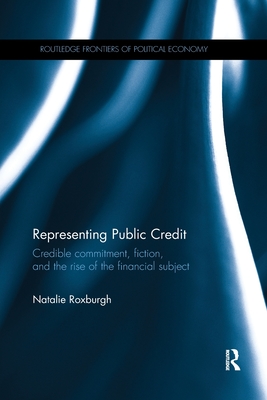
Public credit was controversial in seventeenth- and eighteenth-century England. It entailed new ways of thinking about the individual in relation to the State and was for many reasons a site of cultural negotiation and debate. At the same time, it required commitment from participants in order to function. Some of the debates relating to public credit, whose success was tied up in the way it was represented, find their way into contemporary fiction - in particular the eighteenth-century novel.
This book reads eighteenth-century fiction alongside works of political economy in order to offer a new perspective on credible commitment and the rise of a credit economy facilitated by public credit. Works by authors such as Daniel Defoe, Samuel Richardson, and Frances Burney are explored alongside lesser-known fictional texts, including some early it-narratives and novels of sensibility, to give a fully rounded view of the perception of public credit within England and its wider cultural and social implications. Strategies for representing public credit, the book argues, can be seen as contributing to the development of the English novel, a type of fiction whose emphasis on the individual can also be read as helping to produce a certain type of person, the modern financial subject.
This interdisciplinary book draws from economic history and literary/cultural studies in order to make connections between the development of finance and an important facet of modern Western culture, the novel.
Log in to write a review for this book.
No reviews yet. Be the first to share your opinion.
Biography not available.