Schafer, Mark Editor
Biography not available.

Browse all ART CRITICISM books
Browse all Ashworth books
Browse all FOLKLORE books
Browse all GARDENS books
Browse all GRAPHIC NOVELS books
Browse all Hamilton books
Browse all HISTORY - MEDIEVAL books
Browse all HUMOUR books
Browse all KINDRED books
Browse all LITERARY STUDIES books
Browse all LONDON books
Browse all Lozada books
Browse all Medical : Nursing - Mental Health books
Browse all MIND books
Browse all MUSEOLOGY books
Browse all NON-CLASSIFIABLE books
Browse all NONLINEAR SCIENCE books
Browse all Ormonde books
Browse all POPULAR SCIENCE books
Browse all RELIGIOUS STUDIES books
Browse all SPIRIT books
Browse all SPORT books
Browse all TRAVEL WRITING books
 Out of Stock
Hardback · ISBN 9780367650902
Inclusive of GST and other taxes
Arriving at your doorstep in 10-15 days
Our logisitcs team will make sure everyitem is delivered safely
| ISBN | 9780367650902 |
|---|---|
| Publisher | Routledge |
| Publication date | March 2021 |
| Language | English |
| MRP | £210.00 GBP |
| Page count | 412 |
| Item weight | 159 g |
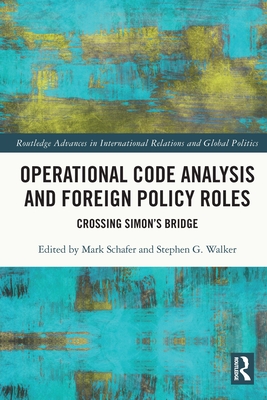
In this book, senior scholars and a new generation of analysts present different applications of recent advances linking beliefs and decision-making, in the area of foreign policy analysis with strategic interactions in world politics.
Divided into five parts, Part 1 identifies how the beliefs in the cognitive operational codes of individual leaders explain the political decisions of states. In Part 2, five chapters illustrate progress in comparing the operational codes of individual leaders, including Vladimir Putin of Russia, three US presidents, Bolivian president Evo Morales, Sri Lanka's President Chandrika Kumaratunga, and various leaders of terrorist organizations operating in the Middle East and North Africa. Part 3 introduces a new Psychological Characteristics of Leaders (PsyCL) data set containing the operational codes of US presidents from the early 1800s to the present. In Part 4, the focus is on strategic interactions among dyads and evolutionary patterns among states in different regional and world systems. Part 5 revisits whether the contents of the preceding chapters support the claims about the links between beliefs and foreign policy roles in world politics.
Richly illustrated and with comprehensive analysis Operational Code Analysis and Foreign Policy Roles will be of interest to specialists in foreign policy analysis, international relations theorists, graduate students, and national security analysts in the policy-making and intelligence communities.
Log in to write a review for this book.
No reviews yet. Be the first to share your opinion.
Biography not available.
Biography not available.