Stasinopoulos, Mikis D. Author
Biography not available.

Browse all FOLKLORE books
Browse all GARDENS books
Browse all GRAPHIC NOVELS books
Browse all HISTORY - MEDIEVAL books
Browse all HUMOUR books
Browse all Juvenile Fiction : Biographical - Other books
Browse all Juvenile Fiction : Historical - Other books
Browse all Juvenile Fiction : Legends, Myths, & Fables - Other books
Browse all Juvenile Fiction : People & Places - Other books
Browse all Juvenile Fiction : People & Places - United States - Other books
Browse all Juvenile Fiction : Religious - Other books
Browse all Juvenile Nonfiction : History - Other books
Browse all Juvenile Nonfiction : Mathematics - Advanced books
Browse all Juvenile Nonfiction : People & Places - Other books
Browse all Juvenile Nonfiction : People & Places - United States - Othe books
Browse all LITERARY STUDIES books
Browse all LONDON books
Browse all Medical : Nursing - Mental Health books
Browse all MIND books
Browse all MUSEOLOGY books
Browse all NON-CLASSIFIABLE books
Browse all NONLINEAR SCIENCE books
Browse all POPULAR SCIENCE books
Browse all RELIGIOUS STUDIES books
Browse all SPIRIT books
Browse all SPORT books
Browse all TRAVEL WRITING books
 Out of Stock
Paperback · ISBN 9780367658069
Inclusive of GST and other taxes
Arriving at your doorstep in 10-15 days
Our logisitcs team will make sure everyitem is delivered safely
| ISBN | 9780367658069 |
|---|---|
| Publisher | Chapman and Hall/CRC |
| Publication date | September 2020 |
| Language | English |
| MRP | £55.99 GBP |
| Page count | 574 |
| Item weight | 217 g |
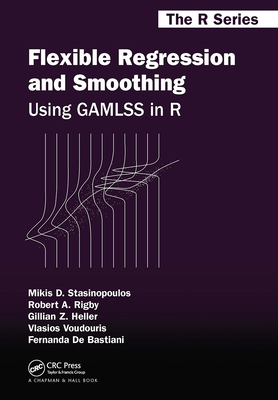
This book is about learning from data using the Generalized Additive Models for Location, Scale and Shape (GAMLSS). GAMLSS extends the Generalized Linear Models (GLMs) and Generalized Additive Models (GAMs) to accommodate large complex datasets, which are increasingly prevalent.
In particular, the GAMLSS statistical framework enables flexible regression and smoothing models to be fitted to the data. The GAMLSS model assumes that the response variable has any parametric (continuous, discrete or mixed) distribution which might be heavy- or light-tailed, and positively or negatively skewed. In addition, all the parameters of the distribution (location, scale, shape) can be modelled as linear or smooth functions of explanatory variables.
Key Features:
This book aims to help readers understand how to learn from data encountered in many fields. It will be useful for practitioners and researchers who wish to understand and use the GAMLSS models to learn from data and also for students who wish to learn GAMLSS through practical examples.
Log in to write a review for this book.
No reviews yet. Be the first to share your opinion.
Biography not available.
Biography not available.
Biography not available.