De Sio, Lorenzo Editor
Biography not available.

Browse all ART CRITICISM books
Browse all Ashworth books
Browse all FOLKLORE books
Browse all GARDENS books
Browse all GRAPHIC NOVELS books
Browse all Hamilton books
Browse all HISTORY - MEDIEVAL books
Browse all HUMOUR books
Browse all KINDRED books
Browse all LITERARY STUDIES books
Browse all LONDON books
Browse all Lozada books
Browse all Medical : Nursing - Mental Health books
Browse all MIND books
Browse all MUSEOLOGY books
Browse all NON-CLASSIFIABLE books
Browse all NONLINEAR SCIENCE books
Browse all Ormonde books
Browse all POPULAR SCIENCE books
Browse all RELIGIOUS STUDIES books
Browse all SPIRIT books
Browse all SPORT books
Browse all TRAVEL WRITING books
 Out of Stock
Hardback · ISBN 9780367710828
Inclusive of GST and other taxes
Arriving at your doorstep in 10-15 days
Our logisitcs team will make sure everyitem is delivered safely
| ISBN | 9780367710828 |
|---|---|
| Publisher | Routledge |
| Publication date | May 2021 |
| Language | English |
| MRP | £171.99 GBP |
| Page count | 254 |
| Item weight | 118 g |
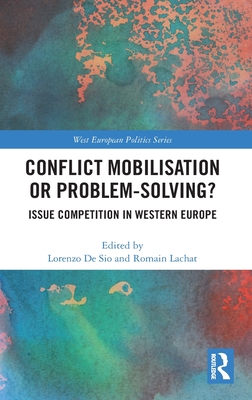
In the aftermath of disruptive electoral and political developments such as the Brexit referendum and the election of Donald Trump, six important European countries went to the polls between 2017 and 2018. This book presents the results of the Issue Competition Comparative Project (ICCP), which analysed these six elections through a focus on post-ideological issue competition, leveraging a fresh theoretical perspective - and innovative data collection and analysis methods - emerging from issue yield theory.
The contributors to this volume cast a new light on electoral developments that have affected Western Europe in recent years, pointing to the key distinction between problem-solvers (parties and leaders that leverage their technocratic competence, and present a consensual, win-win view of contemporary transformations) and conflict mobilizers (that instead invest on the mobilization of conflict emerging from these transformations), as well as to the ability of some actors to mobilize voters across traditional ideological boundaries. In this light, parties commonly identified as "populist" simply emerge distinctively as cross-ideological conflict mobilizers; but mainstream parties appear vital and competitive as well, when they properly identify and leverage their issue advantages. Thus, the fate of democracy in Western Europe does not appear doomed to a triumph of populist appeals, but rather openly depending on the ability of political parties to leverage issue opportunities that emerge from societal demands and needs.
The chapters in this book were originally published as a special issue of West European Politics.
Log in to write a review for this book.
No reviews yet. Be the first to share your opinion.
Biography not available.
Biography not available.