BARTON RUSSELL R Author
Biography not available.

Browse all 112026 books
Browse all 92026 books
Browse all ART CRITICISM books
Browse all Ashworth books
Browse all FOLKLORE books
Browse all GARDENS books
Browse all GRAPHIC NOVELS books
Browse all Hamilton books
Browse all HISTORY - MEDIEVAL books
Browse all HUMOUR books
Browse all Juvenile Fiction : Biographical - Other books
Browse all Juvenile Fiction : Historical - Other books
Browse all Juvenile Fiction : Legends, Myths, & Fables - Other books
Browse all Juvenile Fiction : People & Places - Other books
Browse all Juvenile Fiction : People & Places - United States - Other books
Browse all Juvenile Fiction : Religious - Other books
Browse all Juvenile Nonfiction : History - Other books
Browse all Juvenile Nonfiction : Mathematics - Advanced books
Browse all Juvenile Nonfiction : People & Places - Other books
Browse all Juvenile Nonfiction : People & Places - United States - Othe books
Browse all KINDRED books
Browse all LITERARY STUDIES books
Browse all LONDON books
Browse all Lozada books
Browse all Medical : Nursing - Mental Health books
Browse all MIND books
Browse all MUSEOLOGY books
Browse all NON-CLASSIFIABLE books
Browse all NONLINEAR SCIENCE books
Browse all Ormonde books
Browse all POPULAR SCIENCE books
Browse all RELIGIOUS STUDIES books
Browse all SPIRIT books
Browse all SPORT books
Browse all TRAVEL WRITING books
 Out of Stock
GRAPHICAL METHODS FOR THE DESI
Paperback · ISBN 9780387947501
Inclusive of GST and other taxes
Arriving at your doorstep in 10-15 days
Our logisitcs team will make sure everyitem is delivered safely
| ISBN | 9780387947501 |
|---|---|
| Subtitle | GRAPHICAL METHODS FOR THE DESI |
| Publisher | Springer |
| Publication date | September 1999 |
| Language | English |
| MRP | £99.99 GBP |
| Page count | 212 |
| Item weight | 67 g |
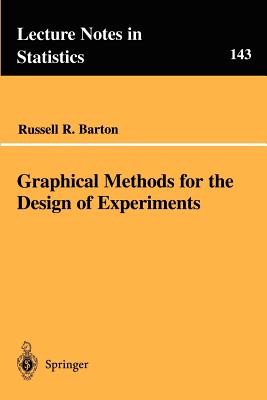
Graphical methods have played an important role in the statistical analysis of experimental data, but have not been used as extensively for experiment design, at least as it is presented in most design of experiments texts. Yet graphical methods are particularly attractive for the design of experiments because they exploit our creative right-brain capabilities. Creative activity is clearly important in any kind of design, certainly for the design ofan experiment. The experimenter must somehow select a set of run conditions that will meet the goals for a particular experiment in a cost-efficient way. Graphical Methods for Experiment Design goes beyond graphical methods for choosing run conditions for an experiment. It looks at the entire pre-experiment planning process, and presents in one place a collection of graphical methods for defining experiment goals, identifying and classifying variables, for choosing a model, for developing a design, and for assessing the adequacy of a design for estimating the unknown coefficients in the proposed statistical model. In addition, tools for developing a design also provide a platform for viewing the results of the experiment, a platform that provides insights that cannot be obtained by examination ofregression coefficients. These techniques can be applied to a variety of situations, including experimental runs of computer simulation models. Factorial and fractional-factorial designs are the focus of the graphical representations, although mixture experiments and experiments involving random effects and blocking are designed and represented in similar ways.
Log in to write a review for this book.
No reviews yet. Be the first to share your opinion.
Biography not available.