Cooper With Contributi, Richard P. Author
Biography not available.

Browse all ART CRITICISM books
Browse all Ashworth books
Browse all BUSINESS AND ECONOMICS books
Browse all FOLKLORE books
Browse all GARDENS books
Browse all GRAPHIC NOVELS books
Browse all HISTORY - MEDIEVAL books
Browse all HUMOUR books
Browse all Juvenile Fiction : Biographical - Other books
Browse all Juvenile Fiction : Historical - Other books
Browse all Juvenile Fiction : Legends, Myths, & Fables - Other books
Browse all Juvenile Fiction : People & Places - Other books
Browse all Juvenile Fiction : People & Places - United States - Other books
Browse all Juvenile Fiction : Religious - Other books
Browse all Juvenile Nonfiction : History - Other books
Browse all Juvenile Nonfiction : Mathematics - Advanced books
Browse all Juvenile Nonfiction : People & Places - Other books
Browse all Juvenile Nonfiction : People & Places - United States - Othe books
Browse all KINDRED books
Browse all LITERARY STUDIES books
Browse all LONDON books
Browse all Lozada books
Browse all Medical : Nursing - Mental Health books
Browse all MIND books
Browse all MUSEOLOGY books
Browse all NON-CLASSIFIABLE books
Browse all NONLINEAR SCIENCE books
Browse all POPULAR SCIENCE books
Browse all RELIGIOUS STUDIES books
Browse all SPIRIT books
Browse all SPORT books
Browse all TRAVEL WRITING books
 Out of Stock
Paperback · ISBN 9780415650236
Inclusive of GST and other taxes
Arriving at your doorstep in 10-15 days
Our logisitcs team will make sure everyitem is delivered safely
| ISBN | 9780415650236 |
|---|---|
| Publisher | Psychology Press |
| Publication date | July 2013 |
| Language | English |
| MRP | £61.99 GBP |
| Page count | 430 |
| Item weight | 126 g |
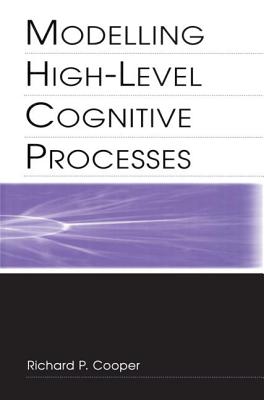
This book is a practical guide to building computational models of high-level cognitive processes and systems. High-level processes are those central cognitive processes involved in thinking, reasoning, planning, and so on. These processes appear to share representational and processing requirements, and it is for this reason that they are considered together in this text.
The book is divided into three parts. Part I considers foundational and background issues. Part II provides a series of case studies spanning a range of cognitive domains. Part III reflects upon issues raised by the case studies. Teachers of cognitive modeling may use material from Part I to structure lectures and practical sessions, with chapters in Part II forming the basis of in-depth student projects.
All models discussed in this book are developed within the COGENT environments. COGENT provides a graphical interface in which models may be sketched as "box and arrow" diagrams and is both a useful teaching tool and a productive research tool. As such, this book is designed to be of use to both students of cognitive modeling and active researchers. For students, the book provides essential background material plus an extensive set of example models, exercises and project material. Researchers of both symbolic and connectionist persuasions will find the book of interest for its approach to cognitive modeling, which emphasizes methodological issues. They will also find that the COGENT environment itself has much to offer.
Log in to write a review for this book.
No reviews yet. Be the first to share your opinion.
Biography not available.
Biography not available.
Biography not available.