Lee, Robert G. Editor
Biography not available.

Browse all FOLKLORE books
Browse all GARDENS books
Browse all GRAPHIC NOVELS books
Browse all HISTORY - MEDIEVAL books
Browse all HUMOUR books
Browse all Juvenile Fiction : Biographical - Other books
Browse all Juvenile Fiction : Historical - Other books
Browse all Juvenile Fiction : Legends, Myths, & Fables - Other books
Browse all Juvenile Fiction : People & Places - Other books
Browse all Juvenile Fiction : People & Places - United States - Other books
Browse all Juvenile Fiction : Religious - Other books
Browse all Juvenile Nonfiction : History - Other books
Browse all Juvenile Nonfiction : Mathematics - Advanced books
Browse all Juvenile Nonfiction : People & Places - Other books
Browse all Juvenile Nonfiction : People & Places - United States - Othe books
Browse all LITERARY STUDIES books
Browse all LONDON books
Browse all Medical : Nursing - Mental Health books
Browse all MIND books
Browse all MUSEOLOGY books
Browse all NON-CLASSIFIABLE books
Browse all NONLINEAR SCIENCE books
Browse all POPULAR SCIENCE books
Browse all RELIGIOUS STUDIES books
Browse all SPIRIT books
Browse all SPORT books
Browse all TRAVEL WRITING books
 Out of Stock
Paperback · ISBN 9780415807760
Inclusive of GST and other taxes
Arriving at your doorstep in 10-15 days
Our logisitcs team will make sure everyitem is delivered safely
| ISBN | 9780415807760 |
|---|---|
| Publisher | Gestalt Press |
| Publication date | September 2011 |
| Language | English |
| MRP | £41.99 GBP |
| Page count | 382 |
| Item weight | 113 g |
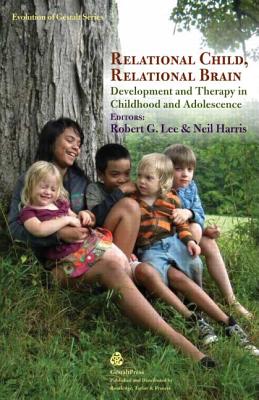
Volume II in the Evolution of Gestalt series, Relational Child, Relational Brain continues the development of the paradigm shift that places human development in a field that is deeply complex and fundamentally one of interconnection, taking us away from the limiting view of us as separate individuals.
It builds on the foundation of contemporary views of relational neurodevelopment and the profound influence of relationship on brain growth. It shows how, particularly in the first two years of life, but continuing across the whole of childhood and adolescence into early adulthood, the relational field is the context of child development. The focus then broadens out to examine the intersubjective influence of community, culture, and social and physical support. Backed by neurobiological and related research, it offers many examples of relational Gestalt practice with children, adolescents, and their families, with stories of loss, trauma, isolation, and other adversities.
Not just an invaluable resource for child and adolescent therapists, Relational Child, Relational Brain goes beyond the Esalen Study Conference from which it emerged and is a further invitation and challenge to apply relational Gestalt practice as a coherent and effective way forward in the troubled world of today.
Log in to write a review for this book.
No reviews yet. Be the first to share your opinion.
Biography not available.
Biography not available.