Ramachandran, Ganapathy Author
Biography not available.

Browse all FOLKLORE books
Browse all GARDENS books
Browse all GRAPHIC NOVELS books
Browse all HISTORY - MEDIEVAL books
Browse all HUMOUR books
Browse all Juvenile Fiction : Biographical - Other books
Browse all Juvenile Fiction : Historical - Other books
Browse all Juvenile Fiction : Legends, Myths, & Fables - Other books
Browse all Juvenile Fiction : People & Places - Other books
Browse all Juvenile Fiction : People & Places - United States - Other books
Browse all Juvenile Fiction : Religious - Other books
Browse all Juvenile Nonfiction : History - Other books
Browse all Juvenile Nonfiction : Mathematics - Advanced books
Browse all Juvenile Nonfiction : People & Places - Other books
Browse all Juvenile Nonfiction : People & Places - United States - Othe books
Browse all LITERARY STUDIES books
Browse all LONDON books
Browse all Medical : Nursing - Mental Health books
Browse all MIND books
Browse all MUSEOLOGY books
Browse all NON-CLASSIFIABLE books
Browse all NONLINEAR SCIENCE books
Browse all POPULAR SCIENCE books
Browse all RELIGIOUS STUDIES books
Browse all SPIRIT books
Browse all SPORT books
Browse all TRAVEL WRITING books
 Out of Stock
QUANTITATIVE RISK ASSESSMENT I
Hardback · ISBN 9780419207900
Inclusive of GST and other taxes
Arriving at your doorstep in 10-15 days
Our logisitcs team will make sure everyitem is delivered safely
| ISBN | 9780419207900 |
|---|---|
| Subtitle | QUANTITATIVE RISK ASSESSMENT I |
| Publisher | Routledge |
| Publication date | February 2011 |
| Language | English |
| MRP | £210.00 GBP |
| Page count | 384 |
| Item weight | 157 g |
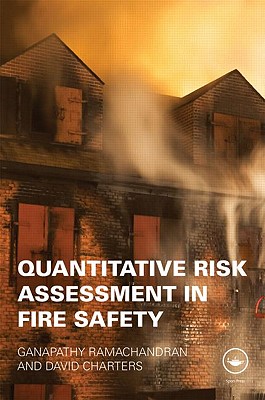
Fire safety regulations in many countries require Fire Risk Assessment to be carried out for buildings such as workplaces and houses in multiple occupation. This duty is imposed on a "Responsible Person" and also on any other persons having control of buildings in compliance with the requirements specified in the regulations.
Although regulations only require a qualitative assessment of fire risk, a quantitative assessment is an essential first step for performing cost-benefit analysis of alternative fire strategies to comply with the regulations and selecting the most cost-effective strategy. To facilitate this assessment, various qualitative, semi-quantitative and quantitative techniques of fire risk assessment, already developed, are critically reviewed in this book and some improvements are suggested.
This book is intended to be an expanded version of Part 7: Probabilistic risk assessment, 2003, a Published Document (PD) to British Standard BS 7974: 2001 on the Application of Fire Safety Engineering Principles to the Design of Buildings. Ganapathy Ramachandran and David Charters were co-authors of PD 7974 Part 7.
Quantitative Risk Assessment in Fire Safety is essential reading for consultants, academics, fire safety engineers, fire officers, building control officers and students in fire safety engineering. It also provides useful tools for fire protection economists and risk management professionals, including those involved in fire insurance underwriting.
Log in to write a review for this book.
No reviews yet. Be the first to share your opinion.
Biography not available.
Biography not available.