Khan,Mohd. Kamra Author
Biography not available.

Browse all ART CRITICISM books
Browse all Ashworth books
Browse all FOLKLORE books
Browse all GARDENS books
Browse all GRAPHIC NOVELS books
Browse all Hamilton books
Browse all HISTORY - MEDIEVAL books
Browse all HUMOUR books
Browse all KINDRED books
Browse all LITERARY STUDIES books
Browse all LONDON books
Browse all Lozada books
Browse all Medical : Nursing - Mental Health books
Browse all MIND books
Browse all MUSEOLOGY books
Browse all NON-CLASSIFIABLE books
Browse all NONLINEAR SCIENCE books
Browse all Ormonde books
Browse all POPULAR SCIENCE books
Browse all RELIGIOUS STUDIES books
Browse all SPIRIT books
Browse all SPORT books
Browse all TRAVEL WRITING books
 Out of Stock
Paperback · ISBN 9780443220906
Inclusive of GST and other taxes
Arriving at your doorstep in 10-15 days
Our logisitcs team will make sure everyitem is delivered safely
| ISBN | 9780443220906 |
|---|---|
| Publisher | Academic Press |
| Publication date | June 2025 |
| Language | English |
| MRP | £165.00 GBP |
| Page count | 476 |
| Item weight | 140 g |
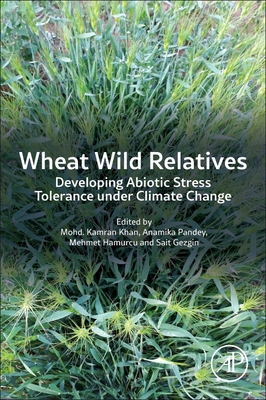
Wheat Wild Relatives: Developing Abiotic Stress Tolerance under Climate Change presents a state-of-the-art outline of the problem, including issues, opportunities, and modern developments in the utilization of Wild Wheat Relatives (WWR) and related neglected species for wheat crop improvement, specifically focusing on environmental constraints. The book comprehensively discusses different wheat wild relatives, including major genus Triticum and Aegilops and their utilization in mitigating different environmental constraints using agronomic, physiological, and molecular approaches. Chapters provide insights into the advancement in the deployment of wheat genetic resources, including wild relatives and neglected species for crop improvement towards environmental issues.
Wheat is a major staple food crop that has largely been focused for fulfilling the food requirements of world population during the Green revolution. Since then, it has come to cover more agricultural land than any other commercial crop. Continuously changing climatic conditions have drastically affected wheat production, with yields largely limited by environmental constraints. Theses production losses caused by crop vulnerability to climate change may be resolved by using wheat wild relatives that are closely related to cultivated genotypes and known for their beneficial traits.
Log in to write a review for this book.
No reviews yet. Be the first to share your opinion.
Biography not available.