Scheffler, Harold W. Author
Biography not available.

Browse all ART CRITICISM books
Browse all Ashworth books
Browse all FOLKLORE books
Browse all GARDENS books
Browse all GRAPHIC NOVELS books
Browse all Hamilton books
Browse all HISTORY - MEDIEVAL books
Browse all HUMOUR books
Browse all KINDRED books
Browse all LITERARY STUDIES books
Browse all LONDON books
Browse all Lozada books
Browse all Medical : Nursing - Mental Health books
Browse all MIND books
Browse all MUSEOLOGY books
Browse all NON-CLASSIFIABLE books
Browse all NONLINEAR SCIENCE books
Browse all Ormonde books
Browse all POPULAR SCIENCE books
Browse all RELIGIOUS STUDIES books
Browse all SPIRIT books
Browse all SPORT books
Browse all TRAVEL WRITING books
 Out of Stock
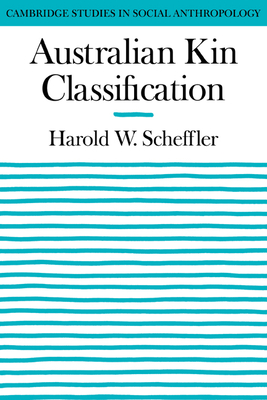
AUSTRALIAN KIN CLASSIFICATION
Paperback · ISBN 9780521040525
Inclusive of GST and other taxes
Arriving at your doorstep in 10-15 days
Our logisitcs team will make sure everyitem is delivered safely
| ISBN | 9780521040525 |
|---|---|
| Subtitle | AUSTRALIAN KIN CLASSIFICATION |
| Publisher | Cambridge University Press |
| Publication date | November 2007 |
| Language | English |
| MRP | £51.00 GBP |
| Page count | 592 |
| Item weight | 189 g |
This study aims to resolve the century-old debate about the nature of Australian aboriginal societies and the comparability of their structures with the structures of other tribal and kinship-based societies. It begins with a critical evaluation and refutation of the claims that Australians are 'ignorant of physical paternity' and therefore cannot have systems of kin classification. Professor Scheffler then demonstrates that systems of kin classification are a common feature of Australian languages and that, contrary to the theory proposed by A. R. Radcliffe-Brown and others, variation in the rules of interkin marriage does not account for variation in systems of kin classification. This was the first monographic treatment of the subject since Radcliffe-Brown's classic work, The Social Organization of the Australian Tribes, published in 1931, and is much more comprehensive and synthetic in its coverage of the range of variation in Australian systems of kin classification. It applies the concepts and methods of structural semantic analysis to a broad range of ethnographic and linguistic data, and demonstrates how they resolve one of anthropology's oldest and most perplexing theoretical puzzles.
Log in to write a review for this book.
No reviews yet. Be the first to share your opinion.
Biography not available.