Black, Duncan Author
Biography not available.

Browse all FOLKLORE books
Browse all GARDENS books
Browse all GRAPHIC NOVELS books
Browse all HISTORY - MEDIEVAL books
Browse all HUMOUR books
Browse all Juvenile Fiction : Biographical - Other books
Browse all Juvenile Fiction : Historical - Other books
Browse all Juvenile Fiction : Legends, Myths, & Fables - Other books
Browse all Juvenile Fiction : People & Places - Other books
Browse all Juvenile Fiction : People & Places - United States - Other books
Browse all Juvenile Fiction : Religious - Other books
Browse all Juvenile Nonfiction : History - Other books
Browse all Juvenile Nonfiction : Mathematics - Advanced books
Browse all Juvenile Nonfiction : People & Places - Other books
Browse all Juvenile Nonfiction : People & Places - United States - Othe books
Browse all LITERARY STUDIES books
Browse all LONDON books
Browse all Medical : Nursing - Mental Health books
Browse all MIND books
Browse all MUSEOLOGY books
Browse all NON-CLASSIFIABLE books
Browse all NONLINEAR SCIENCE books
Browse all POPULAR SCIENCE books
Browse all RELIGIOUS STUDIES books
Browse all SPIRIT books
Browse all SPORT books
Browse all TRAVEL WRITING books
 Out of Stock
THEORY COMMITTEES & ELECTIONS
Paperback · ISBN 9780521141208
Inclusive of GST and other taxes
Arriving at your doorstep in 10-15 days
Our logisitcs team will make sure everyitem is delivered safely
| ISBN | 9780521141208 |
|---|---|
| Subtitle | THEORY COMMITTEES & ELECTIONS |
| Publisher | Cambridge University Press |
| Publication date | April 2011 |
| Language | English |
| MRP | £34.00 GBP |
| Page count | 258 |
| Item weight | 73 g |
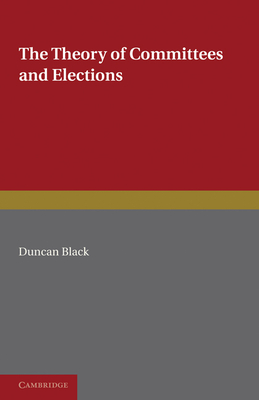
In this book, first published in 1958, the social choice theorist and economist Duncan Black aims to formulate a pure science of politics. Focusing on the mathematics of committees and, accordingly, of elections, Black's writing engages with the theories of Condorcet, Borda and Laplace in order to describe the ways in which different systems of voting will yield different results. This can, as Black discusses in detail, influence whether the chosen candidate or motion is relatively agreeable to all, or only suited to the majority group of voters. Black also presents a history of the political science of elections, placing his own work within the context of earlier research and thought on this subject. Professor Black ensures that only a basic knowledge of arithmetic is needed to understand his arguments, although his methods of reasoning will be more familiar to those readers who have previously studied mathematics and economics.
Log in to write a review for this book.
No reviews yet. Be the first to share your opinion.
Biography not available.