Forman, Richard T. T. Author
Biography not available.

Browse all FOLKLORE books
Browse all GARDENS books
Browse all GRAPHIC NOVELS books
Browse all HISTORY - MEDIEVAL books
Browse all HUMOUR books
Browse all Juvenile Fiction : Biographical - Other books
Browse all Juvenile Fiction : Historical - Other books
Browse all Juvenile Fiction : Legends, Myths, & Fables - Other books
Browse all Juvenile Fiction : People & Places - Other books
Browse all Juvenile Fiction : People & Places - United States - Other books
Browse all Juvenile Fiction : Religious - Other books
Browse all Juvenile Nonfiction : History - Other books
Browse all Juvenile Nonfiction : Mathematics - Advanced books
Browse all Juvenile Nonfiction : People & Places - Other books
Browse all Juvenile Nonfiction : People & Places - United States - Othe books
Browse all LITERARY STUDIES books
Browse all LONDON books
Browse all Medical : Nursing - Mental Health books
Browse all MIND books
Browse all MUSEOLOGY books
Browse all NON-CLASSIFIABLE books
Browse all NONLINEAR SCIENCE books
Browse all POPULAR SCIENCE books
Browse all RELIGIOUS STUDIES books
Browse all SPIRIT books
Browse all SPORT books
Browse all TRAVEL WRITING books
 Out of Stock
Paperback · ISBN 9780521188241
Inclusive of GST and other taxes
Arriving at your doorstep in 10-15 days
Our logisitcs team will make sure everyitem is delivered safely
| ISBN | 9780521188241 |
|---|---|
| Publisher | Cambridge University Press |
| Publication date | February 2014 |
| Language | English |
| MRP | £64.00 GBP |
| Page count | 478 |
| Item weight | 187 g |
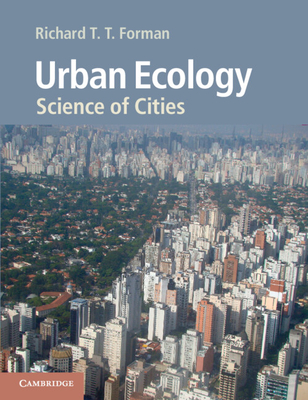
How does nature work in our human-created city, suburb, and exurb/peri-urb? Indeed how is ecology - including its urban water, soil, air, plant, and animal foundations - spatially entwined with this great human enterprise? And how can we improve urban areas for both nature and people? Urban Ecology: Science of Cities explores the entire urban area: from streets, lawns, and parks to riversides, sewer systems, and industrial sites. The book presents models, patterns, and examples from hundreds of cities worldwide. Numerous illustrations enrich the presentation. Cities are analyzed, not as ecologically bad or good, but as places with concentrated rather than dispersed people. Urban ecology principles, traditionally adapted from natural-area ecology, now increasingly emerge from the distinctive features of cities. Spatial patterns and flows, linking organisms, built structures, and the physical environment highlight a treasure chest of useful principles. This pioneering interdisciplinary book opens up frontiers of insight, as a valuable source and text for undergraduates, graduates, researchers, professionals, and others with a thirst for solutions to growing urban problems.
Log in to write a review for this book.
No reviews yet. Be the first to share your opinion.
Biography not available.