Muller, M. E. Author
Biography not available.

Browse all ART CRITICISM books
Browse all Ashworth books
Browse all FOLKLORE books
Browse all GARDENS books
Browse all GRAPHIC NOVELS books
Browse all Hamilton books
Browse all HISTORY - MEDIEVAL books
Browse all HUMOUR books
Browse all KINDRED books
Browse all LITERARY STUDIES books
Browse all LONDON books
Browse all Lozada books
Browse all Medical : Nursing - Mental Health books
Browse all MIND books
Browse all MUSEOLOGY books
Browse all NON-CLASSIFIABLE books
Browse all NONLINEAR SCIENCE books
Browse all Ormonde books
Browse all POPULAR SCIENCE books
Browse all RELIGIOUS STUDIES books
Browse all SPIRIT books
Browse all SPORT books
Browse all TRAVEL WRITING books
 Out of Stock
Hardback · ISBN 9780521190213
Inclusive of GST and other taxes
Arriving at your doorstep in 10-15 days
Our logisitcs team will make sure everyitem is delivered safely
| ISBN | 9780521190213 |
|---|---|
| Publisher | Cambridge University Press |
| Publication date | June 2012 |
| Language | English |
| MRP | £71.00 GBP |
| Page count | 278 |
| Item weight | 142 g |
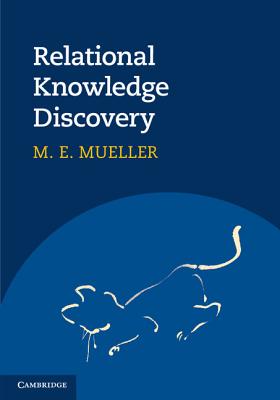
What is knowledge and how is it represented? This book focuses on the idea of formalising knowledge as relations, interpreting knowledge represented in databases or logic programs as relational data and discovering new knowledge by identifying hidden and defining new relations. After a brief introduction to representational issues, the author develops a relational language for abstract machine learning problems. He then uses this language to discuss traditional methods such as clustering and decision tree induction, before moving onto two previously underestimated topics that are just coming to the fore: rough set data analysis and inductive logic programming. Its clear and precise presentation is ideal for undergraduate computer science students. The book will also interest those who study artificial intelligence or machine learning at the graduate level. Exercises are provided and each concept is introduced using the same example domain, making it easier to compare the individual properties of different approaches.
Log in to write a review for this book.
No reviews yet. Be the first to share your opinion.
Biography not available.