Tuozzo, Thomas M. Author
Biography not available.

Browse all ART CRITICISM books
Browse all Ashworth books
Browse all FOLKLORE books
Browse all GARDENS books
Browse all GRAPHIC NOVELS books
Browse all Hamilton books
Browse all HISTORY - MEDIEVAL books
Browse all HUMOUR books
Browse all KINDRED books
Browse all LITERARY STUDIES books
Browse all LONDON books
Browse all Lozada books
Browse all Medical : Nursing - Mental Health books
Browse all MIND books
Browse all MUSEOLOGY books
Browse all NON-CLASSIFIABLE books
Browse all NONLINEAR SCIENCE books
Browse all Ormonde books
Browse all POPULAR SCIENCE books
Browse all RELIGIOUS STUDIES books
Browse all SPIRIT books
Browse all SPORT books
Browse all TRAVEL WRITING books
 Out of Stock
Hardback · ISBN 9780521190404
Inclusive of GST and other taxes
Arriving at your doorstep in 10-15 days
Our logisitcs team will make sure everyitem is delivered safely
| ISBN | 9780521190404 |
|---|---|
| Publisher | Cambridge University Press |
| Publication date | November 2011 |
| Language | English |
| MRP | £105.00 GBP |
| Page count | 372 |
| Item weight | 158 g |
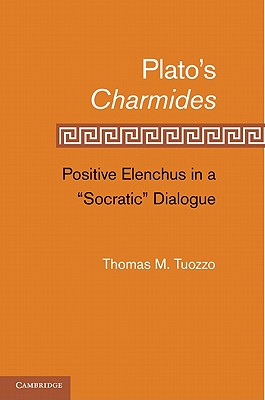
This book argues that Plato's Charmides presents a unitary but incomplete argument intended to lead its readers to substantive philosophical insights. Through careful, contextually sensitive analysis of Plato's arguments concerning the virtue of sophrosyne, Thomas M. Tuozzo brings the dialogue's lines of inquiry together, carrying Plato's argument forward to a substantive conclusion. This innovative reading of Charmides reverses misconceptions about the dialogue that stemmed from an impoverished conception of Socratic elenchus and unquestioned acceptance of ancient historiography's demonization of Critias. It views Socratic argument as a tool intended to move its addressee to substantive philosophical insights. It also argues, on the basis of recent historical research, a review of the fragments of Critias' oeuvre, and Plato's use of Critias in other dialogues, that Plato had a nuanced, generally positive view of Critias. Throughout, readers are alerted to textual difficulties whose proper resolution is crucial to understanding Plato's often abstract arguments.
Log in to write a review for this book.
No reviews yet. Be the first to share your opinion.
Biography not available.