Tilney-Bassett, Richard A. E. Author
Biography not available.

Browse all ART CRITICISM books
Browse all Ashworth books
Browse all FOLKLORE books
Browse all GARDENS books
Browse all GRAPHIC NOVELS books
Browse all Hamilton books
Browse all HISTORY - MEDIEVAL books
Browse all HUMOUR books
Browse all Juvenile Fiction : Biographical - Other books
Browse all Juvenile Fiction : Historical - Other books
Browse all Juvenile Fiction : Legends, Myths, & Fables - Other books
Browse all Juvenile Fiction : People & Places - Other books
Browse all Juvenile Fiction : People & Places - United States - Other books
Browse all Juvenile Fiction : Religious - Other books
Browse all Juvenile Nonfiction : History - Other books
Browse all Juvenile Nonfiction : Mathematics - Advanced books
Browse all Juvenile Nonfiction : People & Places - Other books
Browse all Juvenile Nonfiction : People & Places - United States - Othe books
Browse all KINDRED books
Browse all LITERARY STUDIES books
Browse all LONDON books
Browse all Lozada books
Browse all Medical : Nursing - Mental Health books
Browse all MIND books
Browse all MUSEOLOGY books
Browse all NON-CLASSIFIABLE books
Browse all NONLINEAR SCIENCE books
Browse all Ormonde books
Browse all POPULAR SCIENCE books
Browse all RELIGIOUS STUDIES books
Browse all SPIRIT books
Browse all SPORT books
Browse all TRAVEL WRITING books
 Out of Stock
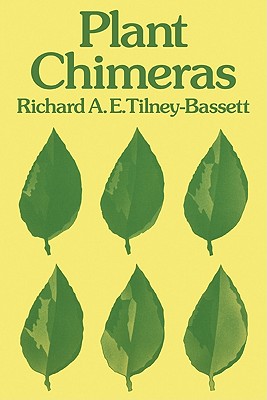
PLANT CHIMERAS
Paperback · ISBN 9780521427876
Inclusive of GST and other taxes
Arriving at your doorstep in 10-15 days
Our logisitcs team will make sure everyitem is delivered safely
| ISBN | 9780521427876 |
|---|---|
| Subtitle | PLANT CHIMERAS |
| Publisher | Cambridge University Press |
| Publication date | March 1991 |
| Language | English |
| MRP | £40.00 GBP |
| Page count | 208 |
| Item weight | 69 g |
This book, which was originally published in 1986, introduces the reader to the main steps in the analysis of chimeras, explains their structural and developmental basis, and the ways of classifying and manipulating them. The twelve chapters separate types of chimeras according to their origin - by grafting or polyploidy; their structure - sectorial or periclinal; or according to the varied parts of the plant most affected - tubers, leaves, flowers or fruit. Throughout the book care is taken to distinguish between the activity of the growing-point in determining chimera structure, and the role of gene expression in determining appearance. Examples of the experimental uses of chimeras are given and of the valuable role they can play in studying fundamental questions of anatomical development; the disadvantages of chimeras in mutation breeding are discussed too.
Log in to write a review for this book.
No reviews yet. Be the first to share your opinion.
Biography not available.