Esterhammer, Angela Author
Biography not available.

Browse all FOLKLORE books
Browse all GARDENS books
Browse all GRAPHIC NOVELS books
Browse all HISTORY - MEDIEVAL books
Browse all HUMOUR books
Browse all Juvenile Fiction : Biographical - Other books
Browse all Juvenile Fiction : Historical - Other books
Browse all Juvenile Fiction : Legends, Myths, & Fables - Other books
Browse all Juvenile Fiction : People & Places - Other books
Browse all Juvenile Fiction : People & Places - United States - Other books
Browse all Juvenile Fiction : Religious - Other books
Browse all Juvenile Nonfiction : History - Other books
Browse all Juvenile Nonfiction : Mathematics - Advanced books
Browse all Juvenile Nonfiction : People & Places - Other books
Browse all Juvenile Nonfiction : People & Places - United States - Othe books
Browse all LITERARY STUDIES books
Browse all LONDON books
Browse all Medical : Nursing - Mental Health books
Browse all MIND books
Browse all MUSEOLOGY books
Browse all NON-CLASSIFIABLE books
Browse all NONLINEAR SCIENCE books
Browse all POPULAR SCIENCE books
Browse all RELIGIOUS STUDIES books
Browse all SPIRIT books
Browse all SPORT books
Browse all TRAVEL WRITING books
 Out of Stock
Hardback · ISBN 9780521897099
Inclusive of GST and other taxes
Arriving at your doorstep in 10-15 days
Our logisitcs team will make sure everyitem is delivered safely
| ISBN | 9780521897099 |
|---|---|
| Publisher | Cambridge University Press |
| Publication date | July 2008 |
| Language | English |
| MRP | £99.00 GBP |
| Page count | 290 |
| Item weight | 123 g |
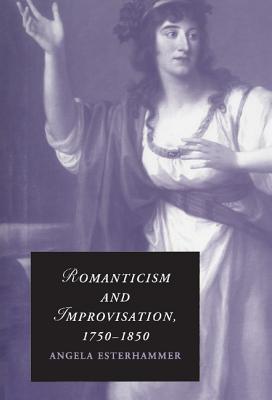
During the Romantic era, especially in Italy, performers known as improvvisatori and improvvisatrici extemporised poetry in public in response to subjects requested by their audiences. This type of performance fascinated Grand Tourists from northern Europe, who reported on poetic improvisers in hundreds of travel accounts, journals, letters, and periodical articles. By uncovering historical data and interpreting literary texts, Professor Esterhammer identifies patterns in the evolving responses of English, German, French, and Russian writers to the experience of improvisation. She explores how improvisation interacts with Romantic ideas about genius, spontaneity, orality, and emotional expressiveness, and relates to evolving concepts of gender and nation. Esterhammer goes on to interpret the influence that the figure of the poetic improviser had in nineteenth-century English and European fiction. In this context, the improvvisatore casts new light on conflicts between poetic genius and socio-economic constraints, and on the evolution of the Bildungsroman.
Log in to write a review for this book.
No reviews yet. Be the first to share your opinion.
Biography not available.