Hallett, Judith P. Editor
Biography not available.

Browse all FOLKLORE books
Browse all GARDENS books
Browse all GRAPHIC NOVELS books
Browse all HISTORY - MEDIEVAL books
Browse all HUMOUR books
Browse all Juvenile Fiction : Biographical - Other books
Browse all Juvenile Fiction : Historical - Other books
Browse all Juvenile Fiction : Legends, Myths, & Fables - Other books
Browse all Juvenile Fiction : People & Places - Other books
Browse all Juvenile Fiction : People & Places - United States - Other books
Browse all Juvenile Fiction : Religious - Other books
Browse all Juvenile Nonfiction : History - Other books
Browse all Juvenile Nonfiction : Mathematics - Advanced books
Browse all Juvenile Nonfiction : People & Places - Other books
Browse all Juvenile Nonfiction : People & Places - United States - Othe books
Browse all LITERARY STUDIES books
Browse all LONDON books
Browse all Medical : Nursing - Mental Health books
Browse all MIND books
Browse all MUSEOLOGY books
Browse all NON-CLASSIFIABLE books
Browse all NONLINEAR SCIENCE books
Browse all POPULAR SCIENCE books
Browse all RELIGIOUS STUDIES books
Browse all SPIRIT books
Browse all SPORT books
Browse all TRAVEL WRITING books
 Out of Stock
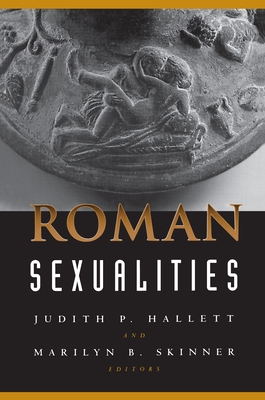
ROMAN SEXUALITIES
Paperback · ISBN 9780691011783
Inclusive of GST and other taxes
Arriving at your doorstep in 10-15 days
Our logisitcs team will make sure everyitem is delivered safely
| ISBN | 9780691011783 |
|---|---|
| Subtitle | ROMAN SEXUALITIES |
| Publisher | Princeton University Press |
| Publication date | December 1997 |
| Language | English |
| MRP | £62.00 GBP |
| Page count | 354 |
| Item weight | 120 g |
This collection of essays seeks to establish Roman constructions of sexuality and gender difference as a distinct area of research, complementing work already done on Greece to give a fuller picture of ancient sexuality. By applying feminist critical tools to forms of public discourse, including literature, history, law, medicine, and political oratory, the essays explore the hierarchy of power reflected so strongly in most Roman sexual relations, where noblemen acted as the penetrators and women, boys, and slaves the penetrated. In many cases, the authors show how these roles could be inverted--in ways that revealed citizens' anxieties during the days of the early Empire, when traditional power structures seemed threatened.
In the essays, Jonathan Walters defines the impenetrable male body as the ideational norm; Holt Parker and Catharine Edwards treat literary and legal models of male sexual deviance; Anthony Corbeill unpacks political charges of immoral behavior at banquets, while Marilyn B. Skinner, Ellen Oliensis, and David Fredrick trace linkages between social status and the gender role of the male speaker in Roman lyric and elegy; Amy Richlin interrogates popular medical belief about the female body; Sandra R. Joshel examines the semiotics of empire underlying the historiographic portrayal of the empress Messalina; Judith P. Hallett and Pamela Gordon critique Roman caricatures of the woman-desiring woman; and Alison Keith discovers subversive allusions to the tragedy of Dido in the elegist Sulpicia's self-depiction as a woman in love.
Log in to write a review for this book.
No reviews yet. Be the first to share your opinion.
Biography not available.
Biography not available.