Longino, Helen E. Author
Biography not available.

Browse all ART CRITICISM books
Browse all Ashworth books
Browse all FOLKLORE books
Browse all GARDENS books
Browse all GRAPHIC NOVELS books
Browse all Hamilton books
Browse all HISTORY - MEDIEVAL books
Browse all HUMOUR books
Browse all KINDRED books
Browse all LITERARY STUDIES books
Browse all LONDON books
Browse all Lozada books
Browse all Medical : Nursing - Mental Health books
Browse all MIND books
Browse all MUSEOLOGY books
Browse all NON-CLASSIFIABLE books
Browse all NONLINEAR SCIENCE books
Browse all Ormonde books
Browse all POPULAR SCIENCE books
Browse all RELIGIOUS STUDIES books
Browse all SPIRIT books
Browse all SPORT books
Browse all TRAVEL WRITING books
 Out of Stock
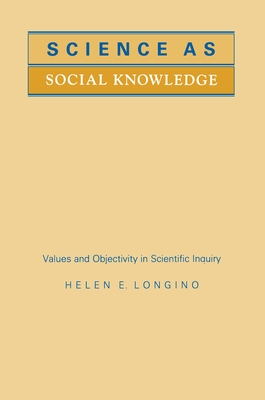
SCIENCE AS SOCIAL KNOWLEDGE
Paperback · ISBN 9780691020518
Inclusive of GST and other taxes
Arriving at your doorstep in 10-15 days
Our logisitcs team will make sure everyitem is delivered safely
| ISBN | 9780691020518 |
|---|---|
| Subtitle | SCIENCE AS SOCIAL KNOWLEDGE |
| Publisher | Princeton University Press |
| Publication date | February 1990 |
| Language | English |
| MRP | £45.00 GBP |
| Page count | 276 |
| Item weight | 95 g |
Conventional wisdom has it that the sciences, properly pursued, constitute a pure, value-free method of obtaining knowledge about the natural world. In light of the social and normative dimensions of many scientific debates, Helen Longino finds that general accounts of scientific methodology cannot support this common belief. Focusing on the notion of evidence, the author argues that a methodology powerful enough to account for theories of any scope and depth is incapable of ruling out the influence of social and cultural values in the very structuring of knowledge. The objectivity of scientific inquiry can nevertheless be maintained, she proposes, by understanding scientific inquiry as a social rather than an individual process. Seeking to open a dialogue between methodologists and social critics of the sciences, Longino develops this concept of "contextual empiricism" in an analysis of research programs that have drawn criticism from feminists. Examining theories of human evolution and of prenatal hormonal determination of "gender-role" behavior, of sex differences in cognition, and of sexual orientation, the author shows how assumptions laden with social values affect the description, presentation, and interpretation of data. In particular, Longino argues that research on the hormonal basis of "sex-differentiated behavior" involves assumptions not only about gender relations but also about human action and agency. She concludes with a discussion of the relation between science, values, and ideology, based on the work of Habermas, Foucault, Keller, and Haraway.
Log in to write a review for this book.
No reviews yet. Be the first to share your opinion.
Biography not available.