Solé, Ricard Author
Biography not available.

Browse all ART CRITICISM books
Browse all Ashworth books
Browse all FOLKLORE books
Browse all GARDENS books
Browse all GRAPHIC NOVELS books
Browse all Hamilton books
Browse all HISTORY - MEDIEVAL books
Browse all HUMOUR books
Browse all KINDRED books
Browse all LITERARY STUDIES books
Browse all LONDON books
Browse all Lozada books
Browse all Medical : Nursing - Mental Health books
Browse all MIND books
Browse all MUSEOLOGY books
Browse all NON-CLASSIFIABLE books
Browse all NONLINEAR SCIENCE books
Browse all Ormonde books
Browse all POPULAR SCIENCE books
Browse all RELIGIOUS STUDIES books
Browse all SPIRIT books
Browse all SPORT books
Browse all TRAVEL WRITING books
 Out of Stock
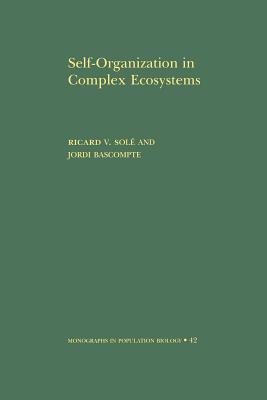
SELF-ORGN IN COMPLEX ECOSYSTEM
Paperback · ISBN 9780691070407
Inclusive of GST and other taxes
Arriving at your doorstep in 10-15 days
Our logisitcs team will make sure everyitem is delivered safely
| ISBN | 9780691070407 |
|---|---|
| Subtitle | SELF-ORGN IN COMPLEX ECOSYSTEM |
| Publisher | Princeton University Press |
| Publication date | March 2006 |
| Language | English |
| MRP | £82.00 GBP |
| Page count | 392 |
| Item weight | 121 g |
Can physics be an appropriate framework for the understanding of ecological science? Most ecologists would probably agree that there is little relation between the complexity of natural ecosystems and the simplicity of any example derived from Newtonian physics. Though ecologists have long been interested in concepts originally developed by statistical physicists and later applied to explain everything from why stock markets crash to why rivers develop particular branching patterns, applying such concepts to ecosystems has remained a challenge.
Self-Organization in Complex Ecosystems is the first book to clearly synthesize what we have learned about the usefulness of tools from statistical physics in ecology. Ricard Solé and Jordi Bascompte provide a comprehensive introduction to complex systems theory, and ask: do universal laws shape the structure of ecosystems, at least at some scales? They offer the most compelling array of theoretical evidence to date of the potential of nonlinear ecological interactions to generate nonrandom, self-organized patterns at all levels.
Tackling classic ecological questions--from population dynamics to biodiversity to macroevolution--the book's novel presentation of theories and data shows the power of statistical physics and complexity in ecology. Self-Organization in Complex Ecosystems will be a staple resource for years to come for ecologists interested in complex systems theory as well as mathematicians and physicists interested in ecology.
Log in to write a review for this book.
No reviews yet. Be the first to share your opinion.
Biography not available.
Biography not available.