Tarr, G. Alan Author
Biography not available.

Browse all ART CRITICISM books
Browse all Ashworth books
Browse all FOLKLORE books
Browse all GARDENS books
Browse all GRAPHIC NOVELS books
Browse all Hamilton books
Browse all HISTORY - MEDIEVAL books
Browse all HUMOUR books
Browse all KINDRED books
Browse all LITERARY STUDIES books
Browse all LONDON books
Browse all Lozada books
Browse all Medical : Nursing - Mental Health books
Browse all MIND books
Browse all MUSEOLOGY books
Browse all NON-CLASSIFIABLE books
Browse all NONLINEAR SCIENCE books
Browse all Ormonde books
Browse all POPULAR SCIENCE books
Browse all RELIGIOUS STUDIES books
Browse all SPIRIT books
Browse all SPORT books
Browse all TRAVEL WRITING books
 Out of Stock
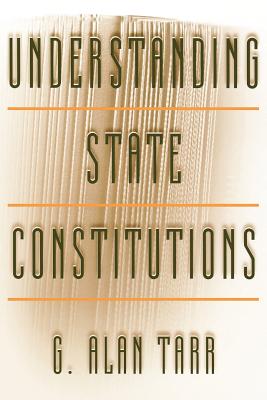
UNDERSTANDING STATE CONSTITUTI
Paperback · ISBN 9780691070667
Inclusive of GST and other taxes
Arriving at your doorstep in 10-15 days
Our logisitcs team will make sure everyitem is delivered safely
| ISBN | 9780691070667 |
|---|---|
| Subtitle | UNDERSTANDING STATE CONSTITUTI |
| Publisher | Princeton University Press |
| Publication date | September 2000 |
| Language | English |
| MRP | £40.00 GBP |
| Page count | 260 |
| Item weight | 85 g |
For many Americans, the word "constitution" means just one thing: the national Constitution. According to a recent survey, almost half do not know that individual states also have constitutions. Scholars have also paid little attention to state constitutions, favoring the apparently more dynamic and significant federal scene. G. Alan Tarr seeks to change that in this landmark book. A leading authority on state legal issues, he combines history, law, and political science to present a thorough and long-needed account of the distinct and important role of state constitutions in American life.
Tarr shows that state constitutional politics are dominated by three crucial issues with little salience at the national level: the distribution of power among groups and regions within states, the scope of state and local governmental authority, and the relation of the state to economic activity. He explains how state constitutions differ from the national Constitution in treating not only matters of high principle but also such mundane subjects as ski trails and motor vehicle revenues. He also explores why state constitutions, unlike their federal counterpart, have been so frequently amended and replaced. Tarr concludes that the United States not only has a system of dual constitutionalism but also has dual constitutional cultures.
Powerfully argued and meticulously researched, the book fills an important gap in political and legal studies and finally gives state constitutions the scholarly attention they richly deserve.
Log in to write a review for this book.
No reviews yet. Be the first to share your opinion.
Biography not available.