Lacey, A. R. Author
Biography not available.

Browse all ART CRITICISM books
Browse all Ashworth books
Browse all FOLKLORE books
Browse all GARDENS books
Browse all GRAPHIC NOVELS books
Browse all Hamilton books
Browse all HISTORY - MEDIEVAL books
Browse all HUMOUR books
Browse all KINDRED books
Browse all LITERARY STUDIES books
Browse all LONDON books
Browse all Lozada books
Browse all Medical : Nursing - Mental Health books
Browse all MIND books
Browse all MUSEOLOGY books
Browse all NON-CLASSIFIABLE books
Browse all NONLINEAR SCIENCE books
Browse all Ormonde books
Browse all POPULAR SCIENCE books
Browse all RELIGIOUS STUDIES books
Browse all SPIRIT books
Browse all SPORT books
Browse all TRAVEL WRITING books
 Out of Stock
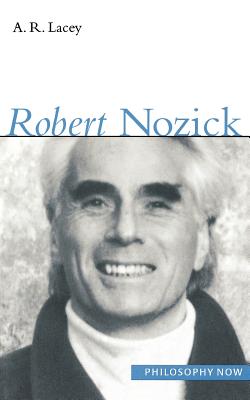
ROBERT NOZICK
Paperback · ISBN 9780691090450
Inclusive of GST and other taxes
Arriving at your doorstep in 10-15 days
Our logisitcs team will make sure everyitem is delivered safely
| ISBN | 9780691090450 |
|---|---|
| Subtitle | ROBERT NOZICK |
| Publisher | Princeton University Press |
| Publication date | July 2001 |
| Language | English |
| MRP | £34.00 GBP |
| Page count | 260 |
| Item weight | 63 g |
Although best known for the hugely influential Anarchy, State, and Utopia (1974), Robert Nozick has eschewed the label ''political philosopher, '' as the vast majority of his writings have focused on other areas. Indeed, the breadth of Nozick's work is perhaps greater than that of any other contemporary philosopher. A. R. Lacey presents the first book to give full and proper discussion of Nozick's philosophy as a whole and of critical reactions to it, spanning areas as diverse as ethics, epistemology, and philosophy of religion.
The book begins by examining Anarchy, State, and Utopia and moves on to Nozick's noted work on the theory of knowledge and his notion of ''tracking the truth.'' Lacey explores the philosopher's metaphysical writings, including his ''closest continuer theory'' of personal identity, and his reflections on free will and the existence of God. He addresses the moral basis of Nozick's political philosophy in depth. Later chapters discuss his ideas of ''symbolic utility, '' his evolutionary account of rationality, and his varying treatments of Newcomb's Paradox. The book concludes with more general topics, including Nozick's thoughts on the meaning of life and what those who search for it are really looking for. Given Nozick's reluctance to respond to his critics, the book's discussion of the secondary literature on his work is invaluable. Throughout, Lacey finds themes that unite Nozick's diverse writings, noting, for example, his hostility to coercion of all kinds. Illuminating, informative, and clearly written, the book will be welcomed as an authoritative guide to Nozick's philosophical thinking.
Log in to write a review for this book.
No reviews yet. Be the first to share your opinion.
Biography not available.