Johnston, Mark Author
Biography not available.

Browse all ART CRITICISM books
Browse all Ashworth books
Browse all BUSINESS AND ECONOMICS books
Browse all FOLKLORE books
Browse all GARDENS books
Browse all GRAPHIC NOVELS books
Browse all HISTORY - MEDIEVAL books
Browse all HUMOUR books
Browse all Juvenile Fiction : Biographical - Other books
Browse all Juvenile Fiction : Historical - Other books
Browse all Juvenile Fiction : Legends, Myths, & Fables - Other books
Browse all Juvenile Fiction : People & Places - Other books
Browse all Juvenile Fiction : People & Places - United States - Other books
Browse all Juvenile Fiction : Religious - Other books
Browse all Juvenile Nonfiction : History - Other books
Browse all Juvenile Nonfiction : Mathematics - Advanced books
Browse all Juvenile Nonfiction : People & Places - Other books
Browse all Juvenile Nonfiction : People & Places - United States - Othe books
Browse all KINDRED books
Browse all LITERARY STUDIES books
Browse all LONDON books
Browse all Lozada books
Browse all Medical : Nursing - Mental Health books
Browse all MIND books
Browse all MUSEOLOGY books
Browse all NON-CLASSIFIABLE books
Browse all NONLINEAR SCIENCE books
Browse all POPULAR SCIENCE books
Browse all RELIGIOUS STUDIES books
Browse all SPIRIT books
Browse all SPORT books
Browse all TRAVEL WRITING books
 Out of Stock
Paperback · ISBN 9780691130132
Inclusive of GST and other taxes
Arriving at your doorstep in 10-15 days
Our logisitcs team will make sure everyitem is delivered safely
| ISBN | 9780691130132 |
|---|---|
| Publisher | Princeton University Press |
| Publication date | October 2011 |
| Language | English |
| MRP | £32.00 GBP |
| Page count | 410 |
| Item weight | 139 g |
Why supernatural beliefs are at odds with a true understanding of the afterlife
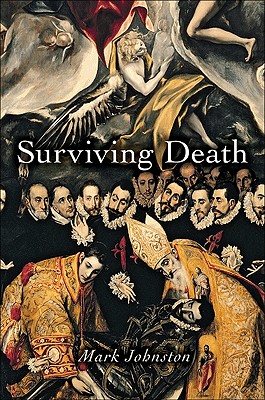
In this extraordinary book, Mark Johnston sets out a new understanding of personal identity and the self, thereby providing a purely naturalistic account of surviving death.
Death threatens our sense of the importance of goodness. The threat can be met if there is, as Socrates said, "something in death that is better for the good than for the bad." Yet, as Johnston shows, all existing theological conceptions of the afterlife are either incoherent or at odds with the workings of nature. These supernaturalist pictures of the rewards for goodness also obscure a striking consilience between the philosophical study of the self and an account of goodness common to Judaism, Christianity, Hinduism, and Buddhism: the good person is one who has undergone a kind of death of the self and who lives a life transformed by entering imaginatively into the lives of others, anticipating their needs and true interests. As a caretaker of humanity who finds his or her own death comparatively unimportant, the good person can see through death.
But this is not all. Johnston's closely argued claims that there is no persisting self and that our identities are in a particular way "Protean" imply that the good survive death. Given the future-directed concern that defines true goodness, the good quite literally live on in the onward rush of humankind. Every time a baby is born a good person acquires a new face.
Log in to write a review for this book.
No reviews yet. Be the first to share your opinion.
Biography not available.