Martin, John Levi Author
Biography not available.

Browse all ART CRITICISM books
Browse all Ashworth books
Browse all BUSINESS AND ECONOMICS books
Browse all FOLKLORE books
Browse all GARDENS books
Browse all GRAPHIC NOVELS books
Browse all HISTORY - MEDIEVAL books
Browse all HUMOUR books
Browse all Juvenile Fiction : Biographical - Other books
Browse all Juvenile Fiction : Historical - Other books
Browse all Juvenile Fiction : Legends, Myths, & Fables - Other books
Browse all Juvenile Fiction : People & Places - Other books
Browse all Juvenile Fiction : People & Places - United States - Other books
Browse all Juvenile Fiction : Religious - Other books
Browse all Juvenile Nonfiction : History - Other books
Browse all Juvenile Nonfiction : Mathematics - Advanced books
Browse all Juvenile Nonfiction : People & Places - Other books
Browse all Juvenile Nonfiction : People & Places - United States - Othe books
Browse all KINDRED books
Browse all LITERARY STUDIES books
Browse all LONDON books
Browse all Lozada books
Browse all Medical : Nursing - Mental Health books
Browse all MIND books
Browse all MUSEOLOGY books
Browse all NON-CLASSIFIABLE books
Browse all NONLINEAR SCIENCE books
Browse all POPULAR SCIENCE books
Browse all RELIGIOUS STUDIES books
Browse all SPIRIT books
Browse all SPORT books
Browse all TRAVEL WRITING books
 Out of Stock
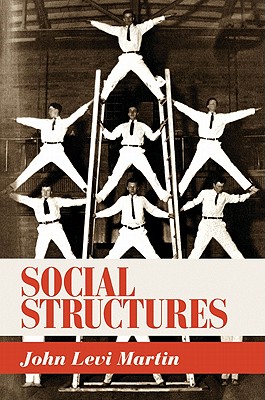
SOCIAL STRUCTURES
Paperback · ISBN 9780691150123
Inclusive of GST and other taxes
Arriving at your doorstep in 10-15 days
Our logisitcs team will make sure everyitem is delivered safely
| ISBN | 9780691150123 |
|---|---|
| Subtitle | SOCIAL STRUCTURES |
| Publisher | Princeton University Press |
| Publication date | March 2011 |
| Language | English |
| MRP | £42.00 GBP |
| Page count | 410 |
| Item weight | 139 g |
Social Structures is a book that examines how structural forms spontaneously arise from social relationships. Offering major insights into the building blocks of social life, it identifies which locally emergent structures have the capacity to grow into larger ones and shows how structural tendencies associated with smaller structures shape and constrain patterns of larger structures. The book then investigates the role such structures have played in the emergence of the modern nation-state.
Bringing together the latest findings in sociology, anthropology, political science, and history, John Levi Martin traces how sets of interpersonal relationships become ordered in different ways to form structures. He looks at a range of social structures, from smaller ones like families and street gangs to larger ones such as communes and, ultimately, nation-states. He finds that the relationships best suited to forming larger structures are those that thrive in conditions of inequality; that are incomplete and as sparse as possible, and thereby avoid the problem of completion in which interacting members are required to establish too many relationships; and that abhor transitivity rather than assuming it. Social Structures argues that these "patronage" relationships, which often serve as means of loose coordination in the absence of strong states, are nevertheless the scaffolding of the social structures most distinctive to the modern state, namely the command army and the political party.
Log in to write a review for this book.
No reviews yet. Be the first to share your opinion.
Biography not available.