Taylor, Eugene Author
Biography not available.

Browse all FOLKLORE books
Browse all GARDENS books
Browse all GRAPHIC NOVELS books
Browse all HISTORY - MEDIEVAL books
Browse all HUMOUR books
Browse all Juvenile Fiction : Biographical - Other books
Browse all Juvenile Fiction : Historical - Other books
Browse all Juvenile Fiction : Legends, Myths, & Fables - Other books
Browse all Juvenile Fiction : People & Places - Other books
Browse all Juvenile Fiction : People & Places - United States - Other books
Browse all Juvenile Fiction : Religious - Other books
Browse all Juvenile Nonfiction : History - Other books
Browse all Juvenile Nonfiction : Mathematics - Advanced books
Browse all Juvenile Nonfiction : People & Places - Other books
Browse all Juvenile Nonfiction : People & Places - United States - Othe books
Browse all LITERARY STUDIES books
Browse all LONDON books
Browse all Medical : Nursing - Mental Health books
Browse all MIND books
Browse all MUSEOLOGY books
Browse all NON-CLASSIFIABLE books
Browse all NONLINEAR SCIENCE books
Browse all POPULAR SCIENCE books
Browse all RELIGIOUS STUDIES books
Browse all SPIRIT books
Browse all SPORT books
Browse all TRAVEL WRITING books
 Out of Stock
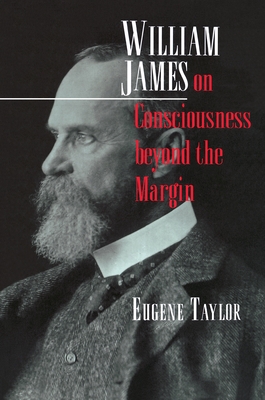
WILLIAM JAMES ON CONSCIOUSNESS
Paperback · ISBN 9780691151144
Inclusive of GST and other taxes
Arriving at your doorstep in 10-15 days
Our logisitcs team will make sure everyitem is delivered safely
| ISBN | 9780691151144 |
|---|---|
| Subtitle | WILLIAM JAMES ON CONSCIOUSNESS |
| Publisher | Princeton University Press |
| Publication date | April 2011 |
| Language | English |
| MRP | £35.00 GBP |
| Page count | 234 |
| Item weight | 74 g |
At the turn of the twentieth century, William James was America's most widely read philosopher. In addition to being one of the founders of pragmatism, however, he was also a leading psychologist and author of the seminal work, The Principles of Psychology (1890). While scholars argue that James withdrew from the study of psychology after 1890, Eugene Taylor demonstrates convincingly that James remained preeminently a psychologist until his death in 1910.
Taylor details James's contributions to experimental psychopathology, psychical research, and the psychology of religion. Moreover, Taylor's work shows that out of his scientific study of consciousness, James formulated a sophisticated metaphysics of radical empiricism. In light of historical developments in psychology, as well as the current philosophic implications of the neuroscience revolution related to the biology of consciousness, Taylor argues that both the subject matter of James's investigations and his metaphysics of radical empiricism are just as important for psychology today as James believed they were in his own time.
This book represents a major new contribution both to James scholarship and to the history of American psychology. Although philosophers have analyzed radical empiricism, this book is the first to trace the development of radical empiricism as a metaphysics addressed to psychologists. It is also the first to show James's involvement in depth-psychology and psychotherapeutics and to trace historical continuity between James's work on consciousness and subsequent developments in psychoanalysis, personality theory, and humanistic psychology.
Log in to write a review for this book.
No reviews yet. Be the first to share your opinion.
Biography not available.