Vandermeer, John H. Author
Biography not available.

Browse all ART CRITICISM books
Browse all Ashworth books
Browse all FOLKLORE books
Browse all GARDENS books
Browse all GRAPHIC NOVELS books
Browse all Hamilton books
Browse all HISTORY - MEDIEVAL books
Browse all HUMOUR books
Browse all KINDRED books
Browse all LITERARY STUDIES books
Browse all LONDON books
Browse all Lozada books
Browse all Medical : Nursing - Mental Health books
Browse all MIND books
Browse all MUSEOLOGY books
Browse all NON-CLASSIFIABLE books
Browse all NONLINEAR SCIENCE books
Browse all Ormonde books
Browse all POPULAR SCIENCE books
Browse all RELIGIOUS STUDIES books
Browse all SPIRIT books
Browse all SPORT books
Browse all TRAVEL WRITING books
 Out of Stock
Paperback · ISBN 9780691160313
Inclusive of GST and other taxes
Arriving at your doorstep in 10-15 days
Our logisitcs team will make sure everyitem is delivered safely
| ISBN | 9780691160313 |
|---|---|
| Publisher | Princeton University Press |
| Publication date | August 2013 |
| Language | English |
| MRP | £80.00 GBP |
| Page count | 288 |
| Item weight | 111 g |
The essential introduction to population ecology--now expanded and fully updated
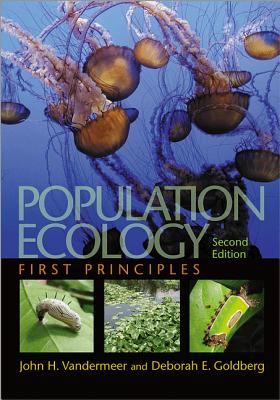
Ecology is capturing the popular imagination like never before, with issues such as climate change, species extinctions, and habitat destruction becoming ever more prominent. At the same time, the science of ecology has advanced dramatically, growing in mathematical and theoretical sophistication. Here, two leading experts present the fundamental quantitative principles of ecology in an accessible yet rigorous way, introducing students to the most basic of all ecological subjects, the structure and dynamics of populations.
John Vandermeer and Deborah Goldberg show that populations are more than simply collections of individuals. Complex variables such as distribution and territory for expanding groups come into play when mathematical models are applied. Vandermeer and Goldberg build these models from the ground up, from first principles, using a broad range of empirical examples, from animals and viruses to plants and humans. They address a host of exciting topics along the way, including age-structured populations, spatially distributed populations, and metapopulations.
This second edition of Population Ecology is fully updated and expanded, with additional exercises in virtually every chapter, making it the most up-to-date and comprehensive textbook of its kind.
Log in to write a review for this book.
No reviews yet. Be the first to share your opinion.
Biography not available.
Biography not available.