Bowles, Samuel Editor
Biography not available.

Browse all ART CRITICISM books
Browse all Ashworth books
Browse all FOLKLORE books
Browse all GARDENS books
Browse all GRAPHIC NOVELS books
Browse all Hamilton books
Browse all HISTORY - MEDIEVAL books
Browse all HUMOUR books
Browse all KINDRED books
Browse all LITERARY STUDIES books
Browse all LONDON books
Browse all Lozada books
Browse all Medical : Nursing - Mental Health books
Browse all MIND books
Browse all MUSEOLOGY books
Browse all NON-CLASSIFIABLE books
Browse all NONLINEAR SCIENCE books
Browse all Ormonde books
Browse all POPULAR SCIENCE books
Browse all RELIGIOUS STUDIES books
Browse all SPIRIT books
Browse all SPORT books
Browse all TRAVEL WRITING books
 Out of Stock
Paperback · ISBN 9780691170930
Inclusive of GST and other taxes
Arriving at your doorstep in 10-15 days
Our logisitcs team will make sure everyitem is delivered safely
| ISBN | 9780691170930 |
|---|---|
| Publisher | Princeton University Press |
| Publication date | May 2016 |
| Language | English |
| MRP | £28.00 GBP |
| Page count | 252 |
| Item weight | 87 g |
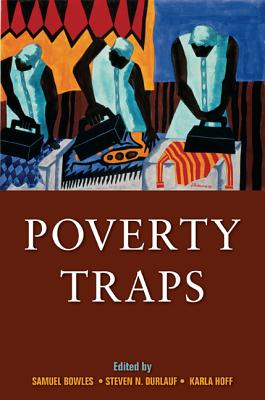
Much popular belief--and public policy--rests on the idea that those born into poverty have it in their power to escape. But the persistence of poverty and ever-growing economic inequality around the world have led many economists to seriously question the model of individual economic self-determination when it comes to the poor. In Poverty Traps, Samuel Bowles, Steven Durlauf, Karla Hoff, and the book's other contributors argue that there are many conditions that may trap individuals, groups, and whole economies in intractable poverty. For the first time the editors have brought together the perspectives of economics, economic history, and sociology to assess what we know--and don't know--about such traps.
Among the sources of the poverty of nations, the authors assign a primary role to social and political institutions, ranging from corruption to seemingly benign social customs such as kin systems. Many of the institutions that keep nations poor have deep roots in colonial history and persist long after their initial causes are gone.
Neighborhood effects--influences such as networks, role models, and aspirations--can create hard-to-escape pockets of poverty even in rich countries. Similar individuals in dissimilar socioeconomic environments develop different preferences and beliefs that can transmit poverty or affluence from generation to generation. The book presents evidence of harmful neighborhood effects and discusses policies to overcome them, with attention to the uncertainty that exists in evaluating such policies.
Log in to write a review for this book.
No reviews yet. Be the first to share your opinion.
Biography not available.
Biography not available.
Biography not available.