Lodge, George Author
Biography not available.

Browse all FOLKLORE books
Browse all GARDENS books
Browse all GRAPHIC NOVELS books
Browse all HISTORY - MEDIEVAL books
Browse all HUMOUR books
Browse all Juvenile Fiction : Biographical - Other books
Browse all Juvenile Fiction : Historical - Other books
Browse all Juvenile Fiction : Legends, Myths, & Fables - Other books
Browse all Juvenile Fiction : People & Places - Other books
Browse all Juvenile Fiction : People & Places - United States - Other books
Browse all Juvenile Fiction : Religious - Other books
Browse all Juvenile Nonfiction : History - Other books
Browse all Juvenile Nonfiction : Mathematics - Advanced books
Browse all Juvenile Nonfiction : People & Places - Other books
Browse all Juvenile Nonfiction : People & Places - United States - Othe books
Browse all LITERARY STUDIES books
Browse all LONDON books
Browse all Medical : Nursing - Mental Health books
Browse all MIND books
Browse all MUSEOLOGY books
Browse all NON-CLASSIFIABLE books
Browse all NONLINEAR SCIENCE books
Browse all POPULAR SCIENCE books
Browse all RELIGIOUS STUDIES books
Browse all SPIRIT books
Browse all SPORT books
Browse all TRAVEL WRITING books
 Out of Stock
Paperback · ISBN 9780691171173
Inclusive of GST and other taxes
Arriving at your doorstep in 10-15 days
Our logisitcs team will make sure everyitem is delivered safely
| ISBN | 9780691171173 |
|---|---|
| Publisher | Princeton University Press |
| Publication date | June 2016 |
| Language | English |
| MRP | £28.00 GBP |
| Page count | 214 |
| Item weight | 74 g |
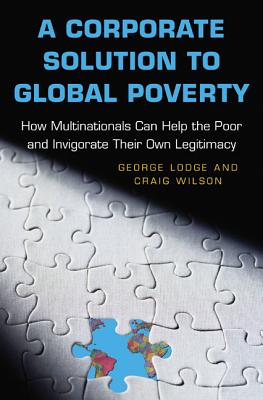
World leaders have given the reduction of global poverty top priority. And yet it persists. Indeed, in many countries whose governments lack either the desire or the ability to act, poverty has worsened. This book, a joint venture of a Harvard professor and an economist with the International Finance Corporation, argues that the solution lies in the creation of a new institution, the World Development Corporation (WDC), a partnership of multinational corporations (MNCs), international development agencies, and nongovernmental organizations (NGOs).
In A Corporate Solution to Global Poverty, George Lodge and Craig Wilson assert that MNCs have the critical combination of capabilities required to build investment, grow economies, and create jobs in poor countries, and thus to reduce poverty. Furthermore, they can do so profitably and thus sustainably. But they lack legitimacy and risk can be high, and so a collective approach is better than one in which an individual company proceeds alone. Thus a UN-sponsored WDC, owned and managed by a dozen or so MNCs with NGO support, will make a marked difference.
At a time when big business has been demonized for destroying the environment, enjoying one-sided benefits from globalization, and deceiving investors, the book argues, MNCs have much to gain from becoming more effective in reducing global poverty. This is not a call for philanthropy. Lodge and Wilson believe that corporate support for the World Development Corporation will benefit not only the world's poor but also company shareholders as a result of improved MNC legitimacy and stronger markets and profitability.
Log in to write a review for this book.
No reviews yet. Be the first to share your opinion.
Biography not available.
Biography not available.