Stull, Donald D. Editor
Biography not available.

Browse all FOLKLORE books
Browse all GARDENS books
Browse all GRAPHIC NOVELS books
Browse all HISTORY - MEDIEVAL books
Browse all HUMOUR books
Browse all Juvenile Fiction : Biographical - Other books
Browse all Juvenile Fiction : Historical - Other books
Browse all Juvenile Fiction : Legends, Myths, & Fables - Other books
Browse all Juvenile Fiction : People & Places - Other books
Browse all Juvenile Fiction : People & Places - United States - Other books
Browse all Juvenile Fiction : Religious - Other books
Browse all Juvenile Nonfiction : History - Other books
Browse all Juvenile Nonfiction : Mathematics - Advanced books
Browse all Juvenile Nonfiction : People & Places - Other books
Browse all Juvenile Nonfiction : People & Places - United States - Othe books
Browse all LITERARY STUDIES books
Browse all LONDON books
Browse all Medical : Nursing - Mental Health books
Browse all MIND books
Browse all MUSEOLOGY books
Browse all NON-CLASSIFIABLE books
Browse all NONLINEAR SCIENCE books
Browse all POPULAR SCIENCE books
Browse all RELIGIOUS STUDIES books
Browse all SPIRIT books
Browse all SPORT books
Browse all TRAVEL WRITING books
 Out of Stock
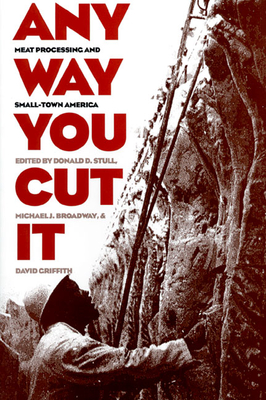
ANY WAY YOU CUT IT
Paperback · ISBN 9780700607228
Inclusive of GST and other taxes
Arriving at your doorstep in 10-15 days
Our logisitcs team will make sure everyitem is delivered safely
| ISBN | 9780700607228 |
|---|---|
| Subtitle | ANY WAY YOU CUT IT |
| Publisher | University Press Of Kansas |
| Publication date | November 1995 |
| Language | English |
| MRP | £27.50 GBP |
| Page count | 288 |
| Item weight | 94 g |
To shed light on the forces that drive the meat industry and the communities where it locates, Donald Stull, Michael Broadway, and David Griffith have brought together the varying perspectives of anthropologists, geographers, sociologists, journalists, and industry specialists. Despite increased automation, these experts show that meat, poultry, and fish processing remain labor intensive create problems for employees, host communities, and government regulatory agencies.
Since 1906 when Sinclair Lewis exposed the horrors of Chicago meat-packing in The Jungle, consumers have been wary of the process that-even under the best conditions-is an ugly business. Conversely, meat packers are often defensive and distrustful of outside advice and government intervention, even as they look for ways to cut costs and enhance low profit margins.
In an effort to lower costs, meat processors have moved from urban to rural areas, where plants are closer to the supply of raw materials. But rural communities lack a pool of surplus labor and companies end up recruiting immigrants, minorities, and women to work on the plant floors. By examining communities in Kansas, Nebraska, Iowa, Georgia, and North Carolina, the authors evaluate the impact rural plants have on regions with few employment opportunities and the strain their presence places on social services, schools, and law enforcement agencies. They also investigate the underlying causes of high rates of injury and personnel turnover within the industry.
Providing an overview of structural and geographical changes occurring in meat processing, the authors explore the factors that sway industry and community decision making and subsequently influence the future of rural America. But more than just an analysis of the current circumstances, Any Way You Cut It proposes alternate routes communities and meat processors can take to reverse deteriorating conditions and avoid potentially explosive predicaments.
Log in to write a review for this book.
No reviews yet. Be the first to share your opinion.
Biography not available.
Biography not available.
Biography not available.