Fairfax, Sally, K. Author
Biography not available.

Browse all ART CRITICISM books
Browse all Ashworth books
Browse all FOLKLORE books
Browse all GARDENS books
Browse all GRAPHIC NOVELS books
Browse all Hamilton books
Browse all HISTORY - MEDIEVAL books
Browse all HUMOUR books
Browse all KINDRED books
Browse all LITERARY STUDIES books
Browse all LONDON books
Browse all Lozada books
Browse all Medical : Nursing - Mental Health books
Browse all MIND books
Browse all MUSEOLOGY books
Browse all NON-CLASSIFIABLE books
Browse all NONLINEAR SCIENCE books
Browse all Ormonde books
Browse all POPULAR SCIENCE books
Browse all RELIGIOUS STUDIES books
Browse all SPIRIT books
Browse all SPORT books
Browse all TRAVEL WRITING books
 Out of Stock
Paperback · ISBN 9780700610792
Inclusive of GST and other taxes
Arriving at your doorstep in 10-15 days
Our logisitcs team will make sure everyitem is delivered safely
| ISBN | 9780700610792 |
|---|---|
| Publisher | University Press Of Kansas |
| Publication date | April 2001 |
| Language | English |
| MRP | £19.99 GBP |
| Page count | 268 |
| Item weight | 80 g |
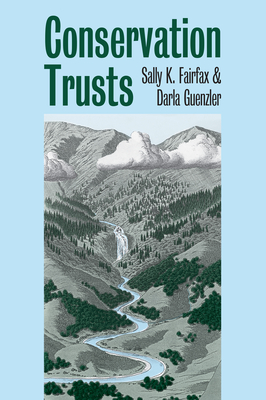
For more than a century, bequests of land and funds for environmental protection have been common, but in recent decades the trusts used to address conservation issues and resolve environmental disputes have diversified and grown significantly. This book examines a variety of conservation organizations built on or close to trust principles--some government creations, some private, some combinations of the two--to explain how conservation trusts are created and how they work. It explores strengths and weaknesses of the trust concept, considers the widespread use of land trusts, and presents case studies that both illustrate successes and give instructive examples of potential pitfalls.
Drawing on cases from Maine to Hawaii, the authors examine the different kinds and configurations of trusts. They consider government trusts that blend federal, state, and local agencies into a single entity or that derive funding from outside legislative and executive channels; trusts established by government and private cooperation to share responsibility for jointly held and managed resources; and trusts established by private organizations and families. For each type, they explain why each is created, how it operates, and whether it has been proven effective. They also address the important issue of accountability-and consider when a trust is not the answer to a problem.
As more Americans reject federal control of land in favor of local determination, land trusts have become the most popular tool for the preservation of land, habitats, and species. And as the sharing of authority among public, private, and diverse government partners becomes more prevalent, sound guidelines for establishing effective trusts are critical. This book shows how the trust template provides an invaluable approach for future conservation efforts and is a primer for anyone involved in environmental management.
Log in to write a review for this book.
No reviews yet. Be the first to share your opinion.
Biography not available.
Biography not available.