Holland, Stephen Author
Biography not available.

Browse all ART CRITICISM books
Browse all Ashworth books
Browse all FOLKLORE books
Browse all GARDENS books
Browse all GRAPHIC NOVELS books
Browse all Hamilton books
Browse all HISTORY - MEDIEVAL books
Browse all HUMOUR books
Browse all KINDRED books
Browse all LITERARY STUDIES books
Browse all LONDON books
Browse all Lozada books
Browse all Medical : Nursing - Mental Health books
Browse all MIND books
Browse all MUSEOLOGY books
Browse all NON-CLASSIFIABLE books
Browse all NONLINEAR SCIENCE books
Browse all Ormonde books
Browse all POPULAR SCIENCE books
Browse all RELIGIOUS STUDIES books
Browse all SPIRIT books
Browse all SPORT books
Browse all TRAVEL WRITING books
 Out of Stock
Paperback · ISBN 9780745690605
Inclusive of GST and other taxes
Arriving at your doorstep in 10-15 days
Our logisitcs team will make sure everyitem is delivered safely
| ISBN | 9780745690605 |
|---|---|
| Publisher | Polity Press |
| Publication date | December 2016 |
| Language | English |
| MRP | £18.99 GBP |
| Page count | 282 |
| Item weight | 84 g |
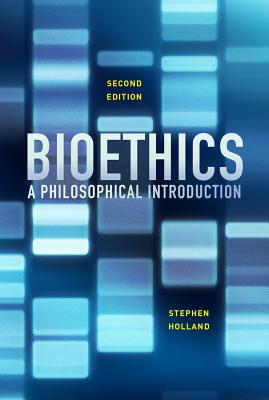
This book provides a clear and comprehensive introduction to contemporary bioethics. It also presents provocative, philosophically informed arguments on current bioethical issues. Holland engages with debates ranging from the more familiar - such as euthanasia, advance decisions to refuse treatment, and new reproductive technologies - to the philosophical implications of recent developments in genetics, including prenatal genetic therapy, genetic enhancement and human cloning. The book is built around four crucial themes. The first is moral status: what are the implications of the moral status of human embryos or animals for our biomedical practices? The second theme - life, death and killing - looks at the ethics of ending, or failing to lengthen, human life. Holland then explores various questions of personal identity raised in contemporary bioethical debates. Finally, he presents and develops a version of the argument from nature - which continues to be influential in bioethics - in order to make sense of the objection that some biomedical innovations are �unnatural�. Structuring the discussions in this way creates an engaging introduction to bioethics that is an ideal textbook for students, whilst offering much to stimulate colleagues in the field.
This second edition has been thoroughly and comprehensively updated to reflect the most recent advances in bioethics, and includes an entirely new chapter on the ethical treatment of patients in the minimally conscious state.
Log in to write a review for this book.
No reviews yet. Be the first to share your opinion.
Biography not available.