Hunt, B.J. Editor
Biography not available.

Browse all ART CRITICISM books
Browse all Ashworth books
Browse all BUSINESS AND ECONOMICS books
Browse all FOLKLORE books
Browse all GARDENS books
Browse all GRAPHIC NOVELS books
Browse all HISTORY - MEDIEVAL books
Browse all HUMOUR books
Browse all Juvenile Fiction : Biographical - Other books
Browse all Juvenile Fiction : Historical - Other books
Browse all Juvenile Fiction : Legends, Myths, & Fables - Other books
Browse all Juvenile Fiction : People & Places - Other books
Browse all Juvenile Fiction : People & Places - United States - Other books
Browse all Juvenile Fiction : Religious - Other books
Browse all Juvenile Nonfiction : History - Other books
Browse all Juvenile Nonfiction : Mathematics - Advanced books
Browse all Juvenile Nonfiction : People & Places - Other books
Browse all Juvenile Nonfiction : People & Places - United States - Othe books
Browse all KINDRED books
Browse all LITERARY STUDIES books
Browse all LONDON books
Browse all Lozada books
Browse all Medical : Nursing - Mental Health books
Browse all MIND books
Browse all MUSEOLOGY books
Browse all NON-CLASSIFIABLE books
Browse all NONLINEAR SCIENCE books
Browse all POPULAR SCIENCE books
Browse all RELIGIOUS STUDIES books
Browse all SPIRIT books
Browse all SPORT books
Browse all TRAVEL WRITING books
 Out of Stock
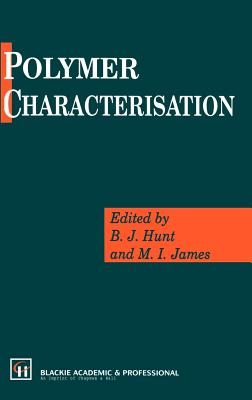
POLYMER CHARACTERISATION 1993/
Hardback · ISBN 9780751400823
Inclusive of GST and other taxes
Arriving at your doorstep in 10-15 days
Our logisitcs team will make sure everyitem is delivered safely
| ISBN | 9780751400823 |
|---|---|
| Subtitle | POLYMER CHARACTERISATION 1993/ |
| Publisher | Springer |
| Publication date | December 1992 |
| Language | English |
| MRP | £179.99 GBP |
| Page count | 380 |
| Item weight | 156 g |
Polymers continue to play an ever increasing role in the modern world. In fact it is quite inconceivable to most people that we could ever have existed of the increased volume and variety of materials without them. As a result currently available, and the diversity of their application, characterisation has become an essential requirement of industrial and academic laboratories in- volved with polymeric materials. On the one hand requirements may come from polymer specialists involved in the design and synthesis of new materials who require a detailed understanding of the relationship between the precise molecular architecture and the properties of the polymer in order to improve its capabilities and range of applications. On the other hand, many analysts who are not polymer specialists are faced with the problems of analysing and testing a wide range of polymeric materials for quality control or material specification purposes. We hope this book will be a useful reference for all scientists and techno- or industrial laboratories, logists involved with polymers, whether in academic and irrespective of their scientific discipline. We have attempted to include in one volume all of the most important techniques. Obviously it is not possible to do this in any great depth but we have encouraged the use of specific examples to illustrate the range of possibilities. In addition numerous references are given to more detailed texts on specific subjects, to direct the reader where appropriate. The book is divided into II chapters.
Log in to write a review for this book.
No reviews yet. Be the first to share your opinion.
Biography not available.
Biography not available.