Hanhijärvi, Tommi Juhani Author
Biography not available.

Browse all ART CRITICISM books
Browse all Ashworth books
Browse all FOLKLORE books
Browse all GARDENS books
Browse all GRAPHIC NOVELS books
Browse all Hamilton books
Browse all HISTORY - MEDIEVAL books
Browse all HUMOUR books
Browse all KINDRED books
Browse all LITERARY STUDIES books
Browse all LONDON books
Browse all Lozada books
Browse all Medical : Nursing - Mental Health books
Browse all MIND books
Browse all MUSEOLOGY books
Browse all NON-CLASSIFIABLE books
Browse all NONLINEAR SCIENCE books
Browse all Ormonde books
Browse all POPULAR SCIENCE books
Browse all RELIGIOUS STUDIES books
Browse all SPIRIT books
Browse all SPORT books
Browse all TRAVEL WRITING books
 Out of Stock
Paperback · ISBN 9780761870890
Inclusive of GST and other taxes
Arriving at your doorstep in 10-15 days
Our logisitcs team will make sure everyitem is delivered safely
| ISBN | 9780761870890 |
|---|---|
| Publisher | Hamilton Books |
| Publication date | March 2019 |
| Language | English |
| MRP | £35.99 GBP |
| Page count | 226 |
| Item weight | 75 g |
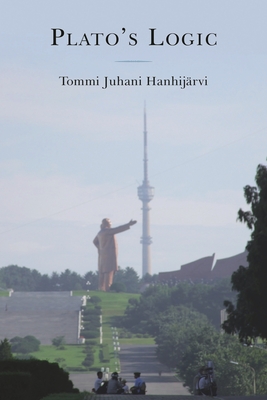
Plato uses a logic without defining or naming it, somewhat as verbs are used in daily life without saying "verbs" or defining them. Linguists may define them. Similarly, Plato's Logic identifies Plato's logic: Plato does not. He lives by it.
The logic in question is used to track down first causes. These begin or end causal series of all four of Aristotle's types of cause. Thus for instance God in the Laws is the first mover in a chain of movers, so God is the first efficient cause. The Republic's Form of the Good, again, is the highest authority or order, and due to this it is the first formal cause. The Symposium's Form of Beauty is the first final cause, that is the ultimate reward. The Phaedo's psyche is a first material cause, being simple (and therefore immortal).
This is not a logic in Aristotle's sense, but luckily that is not the only sense there is. Plato's logic is relational, not Aristotelian. This is because the causes are easiest to interpret as causal relations. Then the causal relations form series, and the series begin or end in Forms or Gods. In this book's formal vocabulary Plato's logic is always of the form aRbRc... zRz (if the terminus is a God) or aRbRc... zRR (if the terminus is a Form).
All of Plato's writing is not quite like this, that is true. But his wildest and most characteristic writings are. He does admittedly write many other things as well. But the core of his philosophy consists of his hyperbolical claims about the Forms and Gods, and so they deserve to be in the limelight.
The general idea of this book is that Plato's idealistic demands make sense in relational idioms. The idealism is not nonsensical or fallacious but rational. Speculation is a duty, not a joke or a sin. Numerous recent scholars are attacked because they belittle it.
Log in to write a review for this book.
No reviews yet. Be the first to share your opinion.
Biography not available.