Corson, P. Author
Biography not available.

Browse all ART CRITICISM books
Browse all Ashworth books
Browse all FOLKLORE books
Browse all GARDENS books
Browse all GRAPHIC NOVELS books
Browse all Hamilton books
Browse all HISTORY - MEDIEVAL books
Browse all HUMOUR books
Browse all Juvenile Fiction : Biographical - Other books
Browse all Juvenile Fiction : Historical - Other books
Browse all Juvenile Fiction : Legends, Myths, & Fables - Other books
Browse all Juvenile Fiction : People & Places - Other books
Browse all Juvenile Fiction : People & Places - United States - Other books
Browse all Juvenile Fiction : Religious - Other books
Browse all Juvenile Nonfiction : History - Other books
Browse all Juvenile Nonfiction : Mathematics - Advanced books
Browse all Juvenile Nonfiction : People & Places - Other books
Browse all Juvenile Nonfiction : People & Places - United States - Othe books
Browse all KINDRED books
Browse all LITERARY STUDIES books
Browse all LONDON books
Browse all Lozada books
Browse all Medical : Nursing - Mental Health books
Browse all MIND books
Browse all MUSEOLOGY books
Browse all NON-CLASSIFIABLE books
Browse all NONLINEAR SCIENCE books
Browse all Ormonde books
Browse all POPULAR SCIENCE books
Browse all RELIGIOUS STUDIES books
Browse all SPIRIT books
Browse all SPORT books
Browse all TRAVEL WRITING books
 Out of Stock
USING ENGLISH WORDS 1995/E
Paperback · ISBN 9780792337119
Inclusive of GST and other taxes
Arriving at your doorstep in 10-15 days
Our logisitcs team will make sure everyitem is delivered safely
| ISBN | 9780792337119 |
|---|---|
| Subtitle | USING ENGLISH WORDS 1995/E |
| Publisher | Springer |
| Publication date | March 1996 |
| Language | English |
| MRP | £59.99 GBP |
| Page count | 240 |
| Item weight | 76 g |
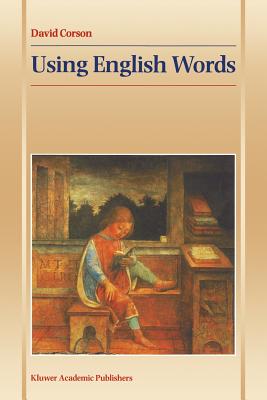
Using English Words examines the impact that the life histories of people have on their vocabulary. Its starting point is the taken-for-granted fact that the vocabulary of English falls into two very different sections. Randolph Quirk mentions this striking incompatibility between the Anglo- Saxon and the Latinate elements in English: "the familiar homely-sounding and typically very short words" that we learn very early in life and use for most everyday purposes; and "the more learned, foreign-sounding and characteristically rather long words" (1974, p. 138). It is mainly the second type of word that native speakers start learning relatively late in their use of English, usually in the adolescent years of education, and keep on learning. It is mainly the one type of word, rather than the other, that ESL/ EFL students have more difficulty with, depending on their language background. This book shows how discursive relations, outside education, 'position' people through their vocabularies. Some are prepared for easy entry into lifetime prospects of relative privilege and educational success, while others are denied entry. In writing this book, I share an aim with other writers who observe the many discontinuities that exist between discursive practices in communities outside schools, and the discursive demands that schools make (e. g. Hamilton et a1. [19931, Heath [1983], Luke [19941, Philips [1983], Romaine [1984], Scollon & Scollon [1981]).
Log in to write a review for this book.
No reviews yet. Be the first to share your opinion.
Biography not available.