Visser 't Hooft, H.P. Author
Biography not available.

Browse all FOLKLORE books
Browse all GARDENS books
Browse all GRAPHIC NOVELS books
Browse all HISTORY - MEDIEVAL books
Browse all HUMOUR books
Browse all Juvenile Fiction : Biographical - Other books
Browse all Juvenile Fiction : Historical - Other books
Browse all Juvenile Fiction : Legends, Myths, & Fables - Other books
Browse all Juvenile Fiction : People & Places - Other books
Browse all Juvenile Fiction : People & Places - United States - Other books
Browse all Juvenile Fiction : Religious - Other books
Browse all Juvenile Nonfiction : History - Other books
Browse all Juvenile Nonfiction : Mathematics - Advanced books
Browse all Juvenile Nonfiction : People & Places - Other books
Browse all Juvenile Nonfiction : People & Places - United States - Othe books
Browse all LITERARY STUDIES books
Browse all LONDON books
Browse all Medical : Nursing - Mental Health books
Browse all MIND books
Browse all MUSEOLOGY books
Browse all NON-CLASSIFIABLE books
Browse all NONLINEAR SCIENCE books
Browse all POPULAR SCIENCE books
Browse all RELIGIOUS STUDIES books
Browse all SPIRIT books
Browse all SPORT books
Browse all TRAVEL WRITING books
 Out of Stock
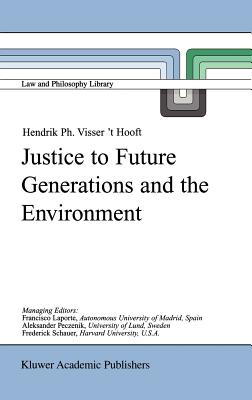
JUSTICE TO FUTURE GENERATIONS
Hardback · ISBN 9780792357568
Inclusive of GST and other taxes
Arriving at your doorstep in 10-15 days
Our logisitcs team will make sure everyitem is delivered safely
| ISBN | 9780792357568 |
|---|---|
| Subtitle | JUSTICE TO FUTURE GENERATIONS |
| Publisher | Springer |
| Publication date | June 1999 |
| Language | English |
| MRP | £89.99 GBP |
| Page count | 184 |
| Item weight | 97 g |
The analysis of justice between generations proposed in this book is based first of all on a critical reading of Rawls' theory of justice, but it also pays attention to the existential and cultural context of our intuitions about intergenerational equity. Although the desire for justice supplies an independent reason for action, the unprecedented character of the context in which that reason must operate necessarily raises the question of its psychological support: we want justice for future people, but what interest do we have in their welfare in the first place? I have tried to capture this double orientation by making use of Thomas Nagel's conceptual dichotomy between the objective, detached point of view, and the subjective (in our case: the cuturally and historically situated) perspective. There is, on the one hand, a desire for justice that tends towards the definition of transhistorical standards, detached from the particular values ofthe time and place; there is, on the other hand, a motivational background that is tied to our present position in history, and nourished by the values we presently believe in. I have attempted to bridge the gap between the one and the other dimension by different conceptual avenues, the principal one being a time-related interpretation of Rawls' concept of equal liberty: justice wants us to maintain the worth of liberty over time by perpetuating the conditions of its meaningful exercise.
Log in to write a review for this book.
No reviews yet. Be the first to share your opinion.
Biography not available.