Michel, Petra Editor
Biography not available.

Browse all FOLKLORE books
Browse all GARDENS books
Browse all GRAPHIC NOVELS books
Browse all HISTORY - MEDIEVAL books
Browse all HUMOUR books
Browse all Juvenile Fiction : Biographical - Other books
Browse all Juvenile Fiction : Historical - Other books
Browse all Juvenile Fiction : Legends, Myths, & Fables - Other books
Browse all Juvenile Fiction : People & Places - Other books
Browse all Juvenile Fiction : People & Places - United States - Other books
Browse all Juvenile Fiction : Religious - Other books
Browse all Juvenile Nonfiction : History - Other books
Browse all Juvenile Nonfiction : Mathematics - Advanced books
Browse all Juvenile Nonfiction : People & Places - Other books
Browse all Juvenile Nonfiction : People & Places - United States - Othe books
Browse all LITERARY STUDIES books
Browse all LONDON books
Browse all Medical : Nursing - Mental Health books
Browse all MIND books
Browse all MUSEOLOGY books
Browse all NON-CLASSIFIABLE books
Browse all NONLINEAR SCIENCE books
Browse all POPULAR SCIENCE books
Browse all RELIGIOUS STUDIES books
Browse all SPIRIT books
Browse all SPORT books
Browse all TRAVEL WRITING books
 Out of Stock
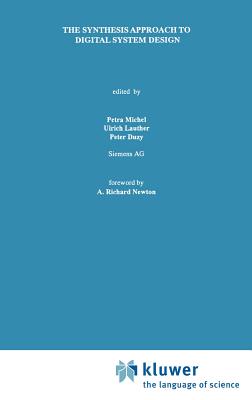
SYNTHESIS APPROACH TO DIGITAL
Hardback · ISBN 9780792391999
Inclusive of GST and other taxes
Arriving at your doorstep in 10-15 days
Our logisitcs team will make sure everyitem is delivered safely
| ISBN | 9780792391999 |
|---|---|
| Subtitle | SYNTHESIS APPROACH TO DIGITAL |
| Publisher | Springer |
| Publication date | March 1992 |
| Language | English |
| MRP | £129.99 GBP |
| Page count | 436 |
| Item weight | 173 g |
Over the past decade there has been a dramatic change in the role played by design automation for electronic systems. Ten years ago, integrated circuit (IC) designers were content to use the computer for circuit, logic, and limited amounts of high-level simulation, as well as for capturing the digitized mask layouts used for IC manufacture. The tools were only aids to design-the designer could always find a way to implement the chip or board manually if the tools failed or if they did not give acceptable results. Today, however, design technology plays an indispensable role in the design ofelectronic systems and is critical to achieving time-to-market, cost, and performance targets. In less than ten years, designers have come to rely on automatic or semi- automatic CAD systems for the physical design ofcomplex ICs containing over a million transistors. In the past three years, practical logic synthesis systems that take into account both cost and performance have become a commercial reality and many designers have already relinquished control ofthe logic netlist level of design to automatic computer aids. To date, only in certain well-defined areas, especially digital signal process- ing and telecommunications. have higher-level design methods and tools found significant success. However, the forces of time-to-market and growing system complexity will demand the broad-based adoption of high-level, automated methods and tools over the next few years.
Log in to write a review for this book.
No reviews yet. Be the first to share your opinion.
Biography not available.
Biography not available.
Biography not available.