Baroody, Arthur J. Editor
Biography not available.

Browse all FOLKLORE books
Browse all GARDENS books
Browse all GRAPHIC NOVELS books
Browse all HISTORY - MEDIEVAL books
Browse all HUMOUR books
Browse all Juvenile Fiction : Biographical - Other books
Browse all Juvenile Fiction : Historical - Other books
Browse all Juvenile Fiction : Legends, Myths, & Fables - Other books
Browse all Juvenile Fiction : People & Places - Other books
Browse all Juvenile Fiction : People & Places - United States - Other books
Browse all Juvenile Fiction : Religious - Other books
Browse all Juvenile Nonfiction : History - Other books
Browse all Juvenile Nonfiction : Mathematics - Advanced books
Browse all Juvenile Nonfiction : People & Places - Other books
Browse all Juvenile Nonfiction : People & Places - United States - Othe books
Browse all LITERARY STUDIES books
Browse all LONDON books
Browse all Medical : Nursing - Mental Health books
Browse all MIND books
Browse all MUSEOLOGY books
Browse all NON-CLASSIFIABLE books
Browse all NONLINEAR SCIENCE books
Browse all POPULAR SCIENCE books
Browse all RELIGIOUS STUDIES books
Browse all SPIRIT books
Browse all SPORT books
Browse all TRAVEL WRITING books
 Out of Stock
Hardback · ISBN 9780805831559
Inclusive of GST and other taxes
Arriving at your doorstep in 10-15 days
Our logisitcs team will make sure everyitem is delivered safely
| ISBN | 9780805831559 |
|---|---|
| Publisher | Routledge |
| Publication date | January 2003 |
| Language | English |
| MRP | £171.99 GBP |
| Page count | 518 |
| Item weight | 198 g |
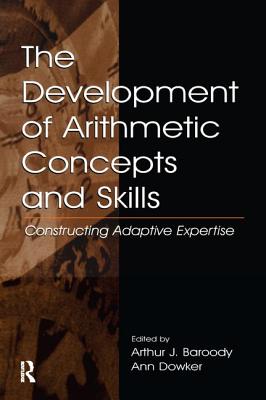
This volume focuses on two related questions that are central to both the psychology of mathematical thinking and learning and to the improvement of mathematics education:
What is the nature of arithmetic expertise?
How can instruction best promote it?
Contributors from a variety of specialities, including cognitive, developmental, educational, and neurological psychology; mathematics education; and special education offer theoretical perspectives and much needed empirical evidence about these issues.
As reported in this volume, both theory and research indicate that the nature of arithmetic expertise and how to best promote it are far more complex than conventional wisdom and many scholars, past and present, have suggested. The results of psychological, educational, and clinical studies using a wide range of arithmetic tasks and populations (including "normally" and atypically developing children, non-injured and brain-injured adults, and savants) all point to the same conclusion: The heart of arithmetic fluency, in general, and the flexible and creative use of strategies, in particular, is what is termed "adaptive expertise" (meaningful or conceptually based knowledge). The construction of adaptive expertise in mathematics is, for the first time, examined across various arithmetic topics and age groups.
This book will be an invaluable resource for researchers and graduate students interested in mathematical cognition and learning (including mathematics educators, developmental and educational psychologists, and neuropsychologists), educators (including teachers, curriculum supervisors, and school administrators), and others interested in improving arithmetic instruction (including officials in national and local education departments, the media, and parents).
Log in to write a review for this book.
No reviews yet. Be the first to share your opinion.
Biography not available.
Biography not available.