Davis, Kathy Author
Biography not available.

Browse all FOLKLORE books
Browse all GARDENS books
Browse all GRAPHIC NOVELS books
Browse all HISTORY - MEDIEVAL books
Browse all HUMOUR books
Browse all Juvenile Fiction : Biographical - Other books
Browse all Juvenile Fiction : Historical - Other books
Browse all Juvenile Fiction : Legends, Myths, & Fables - Other books
Browse all Juvenile Fiction : People & Places - Other books
Browse all Juvenile Fiction : People & Places - United States - Other books
Browse all Juvenile Fiction : Religious - Other books
Browse all Juvenile Nonfiction : History - Other books
Browse all Juvenile Nonfiction : Mathematics - Advanced books
Browse all Juvenile Nonfiction : People & Places - Other books
Browse all Juvenile Nonfiction : People & Places - United States - Othe books
Browse all LITERARY STUDIES books
Browse all LONDON books
Browse all Medical : Nursing - Mental Health books
Browse all MIND books
Browse all MUSEOLOGY books
Browse all NON-CLASSIFIABLE books
Browse all NONLINEAR SCIENCE books
Browse all POPULAR SCIENCE books
Browse all RELIGIOUS STUDIES books
Browse all SPIRIT books
Browse all SPORT books
Browse all TRAVEL WRITING books
 Out of Stock
DANCING TANGO
Paperback · ISBN 9780814760710
Inclusive of GST and other taxes
Arriving at your doorstep in 10-15 days
Our logisitcs team will make sure everyitem is delivered safely
| ISBN | 9780814760710 |
|---|---|
| Subtitle | DANCING TANGO |
| Publisher | NYU Press |
| Publication date | December 2014 |
| Language | English |
| MRP | £25.99 GBP |
| Page count | 236 |
| Item weight | 78 g |
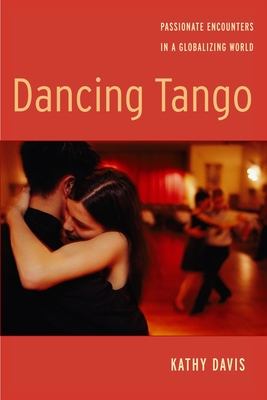
Argentinean tango is a global phenomenon. Since its origin among immigrants from the slums of Buenos Aires and Montevideo, it has crossed and re-crossed many borders.Yet, never before has tango been danced by so many people and in so many different places as today. Argentinean tango is more than a specific music and style of dancing. It is also a cultural imaginary which embodies intense passion, hyper-heterosexuality, and dangerous exoticism.
In the wake of its latest revival, tango has become both a cultural symbol of Argentinean national identity and a transnational cultural space in which a modest, yet growing number of dancers from different parts of the globe meet on the dance floor.
Through interviews and ethnographical research in Amsterdam and Buenos Aires, Kathy Davis shows why a dance from another era and another place appeals to men and women from different parts of the world and what happens to them as they become caught up in the tango salon culture. She shows how they negotiate the ambivalences, contradictions, and hierarchies of gender, sexuality, and global relations of power between North and South in
which Argentinean tango is--and has always been--embroiled.
Davis also explores her uneasiness about her own passion for a dance which--when seen through the lens of contemporary critical feminist and postcolonial theories--seems, at best, odd, and, at worst, disreputable and even a bit shameful. She uses the disjuncture between the incorrect pleasures and complicated politics of dancing tango as a resource for exploring the workings of passion as experience, as performance, and as cultural discourse. She concludes that dancing tango should be viewed less as a love/hate embrace with colonial overtones than a passionate encounter across many different borders between dancers who share a desire for difference and a taste of the 'elsewhere.' Dancing Tango is a vivid, intriguing account of an important global cultural phenomenon.
Log in to write a review for this book.
No reviews yet. Be the first to share your opinion.
Biography not available.