Silberstein, Laurence J. Editor
Biography not available.

Browse all 112026 books
Browse all 92026 books
Browse all ART CRITICISM books
Browse all Ashworth books
Browse all FOLKLORE books
Browse all GARDENS books
Browse all GRAPHIC NOVELS books
Browse all Hamilton books
Browse all HISTORY - MEDIEVAL books
Browse all HUMOUR books
Browse all Juvenile Fiction : Biographical - Other books
Browse all Juvenile Fiction : Historical - Other books
Browse all Juvenile Fiction : Legends, Myths, & Fables - Other books
Browse all Juvenile Fiction : People & Places - Other books
Browse all Juvenile Fiction : People & Places - United States - Other books
Browse all Juvenile Fiction : Religious - Other books
Browse all Juvenile Nonfiction : History - Other books
Browse all Juvenile Nonfiction : Mathematics - Advanced books
Browse all Juvenile Nonfiction : People & Places - Other books
Browse all Juvenile Nonfiction : People & Places - United States - Othe books
Browse all KINDRED books
Browse all LITERARY STUDIES books
Browse all LONDON books
Browse all Lozada books
Browse all Medical : Nursing - Mental Health books
Browse all MIND books
Browse all MUSEOLOGY books
Browse all NON-CLASSIFIABLE books
Browse all NONLINEAR SCIENCE books
Browse all Ormonde books
Browse all POPULAR SCIENCE books
Browse all RELIGIOUS STUDIES books
Browse all SPIRIT books
Browse all SPORT books
Browse all TRAVEL WRITING books
 Out of Stock
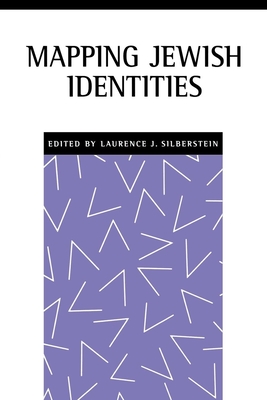
MAPPING JEWISH IDENTITIES
Paperback · ISBN 9780814797693
Inclusive of GST and other taxes
Arriving at your doorstep in 10-15 days
Our logisitcs team will make sure everyitem is delivered safely
| ISBN | 9780814797693 |
|---|---|
| Subtitle | MAPPING JEWISH IDENTITIES |
| Publisher | NYU Press |
| Publication date | July 2000 |
| Language | English |
| MRP | £25.99 GBP |
| Page count | 380 |
| Item weight | 123 g |
Is Jewish identity flourishing or in decline? Community leaders and scholarly researchers continually seek to determine the attitudes, beliefs, and activities that best measure Jewish identity. At issue, according to these studies, is the very survival of the Jewish community itself. But such studies rarely ask what actually is being examined when we attempt to assess "Jewish identity" or any identity. Most tend to assume that identity is a preexisting, relatively fixed frame of reference reflecting shared cultural and historical experiences.
Drawing on recent work in such fields as cultural studies, poststructuralist theory, postmodern philosophy, and feminist theory, Mapping Jewish Identities challenges this premise. Contesting conventional approaches to Jewish identity, contributors argue that Jewish identity should be conceptualized as an ongoing dynamic process of "becoming" in response to changing cultural and social conditions rather than as a stable defining body of traits.
Contributors, including Daniel Boyarin, Laura Levitt, Adi Ophir, and Gordon Bearn, examine such topics as American Jews' desires to connect with a lost immigrant past through photography, the complicated function of the Holocaust in the identity formation of contemporary Jews, the impact of the struggle with the Palestinians on Israeli group identity construction, and the ways in which repressed voices such as those of women, Mizrahim, and Israeli Arabs have changed our ways of thinking about Jewish and Israeli identity.
Log in to write a review for this book.
No reviews yet. Be the first to share your opinion.
Biography not available.