Schneider, Gregory L. Author
Biography not available.

Browse all FOLKLORE books
Browse all GARDENS books
Browse all GRAPHIC NOVELS books
Browse all HISTORY - MEDIEVAL books
Browse all HUMOUR books
Browse all Juvenile Fiction : Biographical - Other books
Browse all Juvenile Fiction : Historical - Other books
Browse all Juvenile Fiction : Legends, Myths, & Fables - Other books
Browse all Juvenile Fiction : People & Places - Other books
Browse all Juvenile Fiction : People & Places - United States - Other books
Browse all Juvenile Fiction : Religious - Other books
Browse all Juvenile Nonfiction : History - Other books
Browse all Juvenile Nonfiction : Mathematics - Advanced books
Browse all Juvenile Nonfiction : People & Places - Other books
Browse all Juvenile Nonfiction : People & Places - United States - Othe books
Browse all LITERARY STUDIES books
Browse all LONDON books
Browse all Medical : Nursing - Mental Health books
Browse all MIND books
Browse all MUSEOLOGY books
Browse all NON-CLASSIFIABLE books
Browse all NONLINEAR SCIENCE books
Browse all POPULAR SCIENCE books
Browse all RELIGIOUS STUDIES books
Browse all SPIRIT books
Browse all SPORT books
Browse all TRAVEL WRITING books
 Out of Stock
CONSERVATISM IN AMER SINCE 193
Hardback · ISBN 9780814797983
Inclusive of GST and other taxes
Arriving at your doorstep in 10-15 days
Our logisitcs team will make sure everyitem is delivered safely
| ISBN | 9780814797983 |
|---|---|
| Subtitle | CONSERVATISM IN AMER SINCE 193 |
| Publisher | NYU Press |
| Publication date | June 2003 |
| Language | English |
| MRP | £80.00 GBP |
| Page count | 466 |
| Item weight | 181 g |
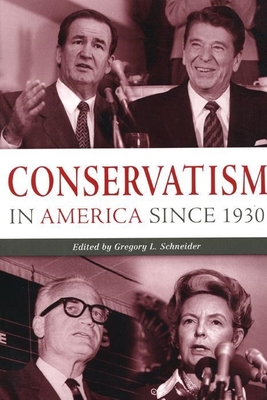
A collection of documents by conservative thinkers, tracing the rise and prevalence of conservatism in modern America
While there have long been libertarians, agrarians, individualists, collectivists, nationalists, and others who fit the contemporary label of "conservative," no cohesive conservative movement existed prior to World War II. How, then, did conservatism develop into such a powerful American political force?
Tracing the history of conservatism from the concerns and ideas of the Old Right, through the Cold War, the "Gingrich revolution," and into the present, Conservatism in America Since 1930 gathers a wide range of conservative writings and documents showcasing the development and protean character of the modern conservative intellectual and political movement.
The book includes essays from Russell Kirk, Milton Friedman, F.A. Hayek, William F. Buckley, Jr., Ronald Reagan, and Pat Buchanan, among others, and highlights key debates between the movement's factions. Along with essays by these canonical conservative figures, the volume also contains excerpts from sources less frequently cited, such as the Twelve Southerners and Seward Collins, as well as documents from conservative organizations and journals. The primary documents are supplemented by introductions which set the historical context and offer illuminating commentary on how conservatism shifted identity over the course of modern American history.
Log in to write a review for this book.
No reviews yet. Be the first to share your opinion.
Biography not available.
Biography not available.
Biography not available.