Jones, Charles O. Author
Biography not available.

Browse all 112026 books
Browse all 92026 books
Browse all ART CRITICISM books
Browse all Ashworth books
Browse all FOLKLORE books
Browse all GARDENS books
Browse all GRAPHIC NOVELS books
Browse all Hamilton books
Browse all HISTORY - MEDIEVAL books
Browse all HUMOUR books
Browse all Juvenile Fiction : Biographical - Other books
Browse all Juvenile Fiction : Historical - Other books
Browse all Juvenile Fiction : Legends, Myths, & Fables - Other books
Browse all Juvenile Fiction : People & Places - Other books
Browse all Juvenile Fiction : People & Places - United States - Other books
Browse all Juvenile Fiction : Religious - Other books
Browse all Juvenile Nonfiction : History - Other books
Browse all Juvenile Nonfiction : Mathematics - Advanced books
Browse all Juvenile Nonfiction : People & Places - Other books
Browse all Juvenile Nonfiction : People & Places - United States - Othe books
Browse all KINDRED books
Browse all LITERARY STUDIES books
Browse all LONDON books
Browse all Lozada books
Browse all Medical : Nursing - Mental Health books
Browse all MIND books
Browse all MUSEOLOGY books
Browse all NON-CLASSIFIABLE books
Browse all NONLINEAR SCIENCE books
Browse all Ormonde books
Browse all POPULAR SCIENCE books
Browse all RELIGIOUS STUDIES books
Browse all SPIRIT books
Browse all SPORT books
Browse all TRAVEL WRITING books
 Out of Stock
PRESIDENCY IN SEPARATED SYSTEM
Paperback · ISBN 9780815747093
Inclusive of GST and other taxes
Arriving at your doorstep in 10-15 days
Our logisitcs team will make sure everyitem is delivered safely
| ISBN | 9780815747093 |
|---|---|
| Subtitle | PRESIDENCY IN SEPARATED SYSTEM |
| Publisher | Brookings Institution Press |
| Publication date | May 1994 |
| Language | English |
| MRP | £25.99 GBP |
| Page count | 360 |
| Item weight | 117 g |
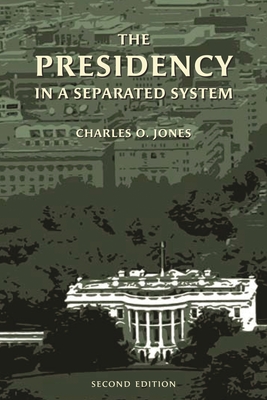
Popular interpretations of American government tend to center on the presidency. Successes and failures of government are often attributed to presidents themselves. But, though the White House stands as a powerful symbol of government, the United States has a separated system intentionally designed to distribute power, not to concentrate it. Charles O. Jones explains that focusing exclusively on the presidency can lead to a seriously distorted picture of how the national government works. The role of the president varies widely, depending on his resources, advantages, and strategic position. Public expectations often far exceed the president's personal, political, institutional, or constitutional capacities for achievement. Jones explores how presidents find their place in the permanent government and how they are ""fitted in"" by others, most notably those on Capitol Hill. This book shows how a separated system of government works under the circumstances created by the Constitution and encouraged by a two-party system. Jones examines the organizational challenges facing presidents, their public standing and what it means, presidential agendas and mandates, and lawmaking--how it works, where the president fits in, and how it varies from issue to issue. He compares the post-World War II presidents and identifies the strengths and weaknesses of each in working within the separated system. Jones proposes a view of government as a legitimate, even productive, form of decisionmaking and emphasizes the varying strategies available to presidents for governing. He concludes with a number of important lessons for presidents and advice on how to make the separated system work better.
Log in to write a review for this book.
No reviews yet. Be the first to share your opinion.
Biography not available.