Baylis, William E. Author
Biography not available.

Browse all ART CRITICISM books
Browse all Ashworth books
Browse all FOLKLORE books
Browse all GARDENS books
Browse all GRAPHIC NOVELS books
Browse all Hamilton books
Browse all HISTORY - MEDIEVAL books
Browse all HUMOUR books
Browse all Juvenile Fiction : Biographical - Other books
Browse all Juvenile Fiction : Historical - Other books
Browse all Juvenile Fiction : Legends, Myths, & Fables - Other books
Browse all Juvenile Fiction : People & Places - Other books
Browse all Juvenile Fiction : People & Places - United States - Other books
Browse all Juvenile Fiction : Religious - Other books
Browse all Juvenile Nonfiction : History - Other books
Browse all Juvenile Nonfiction : Mathematics - Advanced books
Browse all Juvenile Nonfiction : People & Places - Other books
Browse all Juvenile Nonfiction : People & Places - United States - Othe books
Browse all KINDRED books
Browse all LITERARY STUDIES books
Browse all LONDON books
Browse all Lozada books
Browse all Medical : Nursing - Mental Health books
Browse all MIND books
Browse all MUSEOLOGY books
Browse all NON-CLASSIFIABLE books
Browse all NONLINEAR SCIENCE books
Browse all Ormonde books
Browse all POPULAR SCIENCE books
Browse all RELIGIOUS STUDIES books
Browse all SPIRIT books
Browse all SPORT books
Browse all TRAVEL WRITING books
 Out of Stock
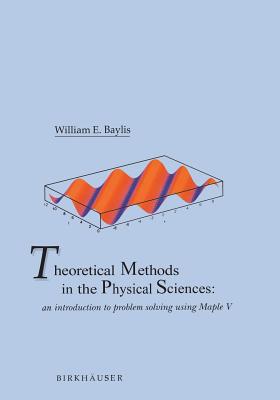
THEORETICAL METHODS IN THE PHY
Paperback · ISBN 9780817637156
Inclusive of GST and other taxes
Arriving at your doorstep in 10-15 days
Our logisitcs team will make sure everyitem is delivered safely
| ISBN | 9780817637156 |
|---|---|
| Subtitle | THEORETICAL METHODS IN THE PHY |
| Publisher | Birkhäuser |
| Publication date | August 1994 |
| Language | English |
| MRP | £54.99 GBP |
| Page count | 308 |
| Item weight | 119 g |
The advent of relatively inexpensive but powerful computers is af- fecting practically all aspects of our lives, but some of the greatest influence is being felt in the physical sciences. However, university curricula and teaching methods have responded somewhat cautiously, having only recently come to terms with the now omnipresent calcula- tor. While many instructors at first feared that the widespread use of pocket calculators would lead to generations of students who could not multiply or perhaps even add, few now seriously lament the disappear- ance of slide rules, logarithm tables, and the often error-bound tedium that such tools of the trade demand. Time that used to be spent on the use of logarithm tables and manual square-root extraction can be prof- itably turned to earlier studies of calculus or computer programming. Now that the calculator has been accepted into the classroom, we face a computer-software revolution which promises to be considerably more profound. Modern textbooks in the physical sciences routinely assume their readers have access not only to calculators, but often to home or even mainframe computers as well, and the problems teachers discuss and assign students can be more complex and often more realistic than in the days of only pad and pencil computations. As less effort is spent on numerical computation, more can be devoted to conceptual under- standing and to applications of the increasingly sophisticated mathe- matical methods needed for a real appreciation of recent advances in the discipline.
Log in to write a review for this book.
No reviews yet. Be the first to share your opinion.
Biography not available.