World Bank, Author
Biography not available.

Browse all FOLKLORE books
Browse all GARDENS books
Browse all GRAPHIC NOVELS books
Browse all HISTORY - MEDIEVAL books
Browse all HUMOUR books
Browse all Juvenile Fiction : Biographical - Other books
Browse all Juvenile Fiction : Historical - Other books
Browse all Juvenile Fiction : Legends, Myths, & Fables - Other books
Browse all Juvenile Fiction : People & Places - Other books
Browse all Juvenile Fiction : People & Places - United States - Other books
Browse all Juvenile Fiction : Religious - Other books
Browse all Juvenile Nonfiction : History - Other books
Browse all Juvenile Nonfiction : Mathematics - Advanced books
Browse all Juvenile Nonfiction : People & Places - Other books
Browse all Juvenile Nonfiction : People & Places - United States - Othe books
Browse all LITERARY STUDIES books
Browse all LONDON books
Browse all Medical : Nursing - Mental Health books
Browse all MIND books
Browse all MUSEOLOGY books
Browse all NON-CLASSIFIABLE books
Browse all NONLINEAR SCIENCE books
Browse all POPULAR SCIENCE books
Browse all RELIGIOUS STUDIES books
Browse all SPIRIT books
Browse all SPORT books
Browse all TRAVEL WRITING books
 Out of Stock
AFRICAS INFRASTRUCTURE
Paperback · ISBN 9780821380413
Inclusive of GST and other taxes
Arriving at your doorstep in 10-15 days
Our logisitcs team will make sure everyitem is delivered safely
| ISBN | 9780821380413 |
|---|---|
| Subtitle | AFRICAS INFRASTRUCTURE |
| Publisher | World Bank Publications |
| Publication date | December 2009 |
| Language | English |
| MRP | £32.00 GBP |
| Page count | 384 |
| Item weight | 168 g |
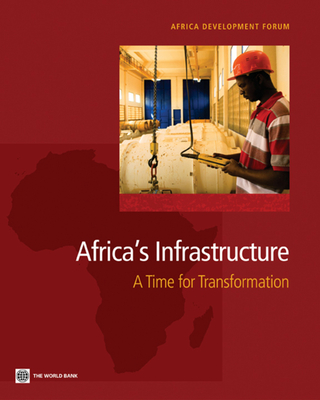
Sustainable infrastructure development is vital for Africa's prosperity. And now is the time to begin the transformation. This volume is the culmination of an unprecedented effort to document, analyze, and interpret the full extent of the challenge in developing Sub-Saharan Africa's infrastructure sectors. As a result, it represents the most comprehensive reference currently available on infrastructure in the region. The book covers the five main economic infrastructure sectors--information and communication technology, irrigation, power, transport, and water and sanitation. 'Africa's Infrastructure: A Time for Transformation' reflects the collaboration of a wide array of African regional institutions and development partners under the auspices of the Infrastructure Consortium for Africa. It presents the findings of the Africa Infrastructure Country Diagnostic (AICD), a project launched following a commitment in 2005 by the international community (after the G8 summit at Gleneagles, Scotland) to scale up financial support for infrastructure development in Africa. The lack of reliable information in this area made it difficult to evaluate the success of past interventions, prioritize current allocations, and provide benchmarks for measuring future progress, hence the need for the AICD. Africa's infrastructure sectors lag well behind those of the rest of the world, and the gap is widening. Some of the main--policy-relevant--findings highlighted in the book include the following: infrastructure in the region is exceptionally expensive, with tariffs being many times higher than those found elsewhere. Inadequate and expensive infrastructure is retarding growth by 2 percentage points each year. Solving the problem will cost over US$90 billion per year, which is more than twice what is being spent in Africa today. However, money alone is not the answer. Prudent policies, wise management, and sound maintenance can improve efficiency, thereby stretching the infrastructure dollar. There is the potential to recover an additional US$17 billion a year from within the existing infrastructure resource envelope--simply by improving efficiency. For example, improved revenue collection and utility management could generate US$3.3 billion per year. Regional power trade could reduce annual costs by US$2 billion. And deregulating the trucking industry could reduce freight costs by one-half. So, raising more funds without also tackling inefficiencies would be like pouring water into a leaking bucket. Finally, the power sector and fragile states represent particular challenges. Even if every efficiency in every infrastructure sector could be captured, a substantial funding gap of $31 billion a year would remain. Nevertheless, the African people and economies cannot wait any longer. Now is the time to begin the transformation to sustainable development.
Log in to write a review for this book.
No reviews yet. Be the first to share your opinion.
Biography not available.