The World Bank Author
Biography not available.

Browse all FOLKLORE books
Browse all GARDENS books
Browse all GRAPHIC NOVELS books
Browse all HISTORY - MEDIEVAL books
Browse all HUMOUR books
Browse all Juvenile Fiction : Biographical - Other books
Browse all Juvenile Fiction : Historical - Other books
Browse all Juvenile Fiction : Legends, Myths, & Fables - Other books
Browse all Juvenile Fiction : People & Places - Other books
Browse all Juvenile Fiction : People & Places - United States - Other books
Browse all Juvenile Fiction : Religious - Other books
Browse all Juvenile Nonfiction : History - Other books
Browse all Juvenile Nonfiction : Mathematics - Advanced books
Browse all Juvenile Nonfiction : People & Places - Other books
Browse all Juvenile Nonfiction : People & Places - United States - Othe books
Browse all LITERARY STUDIES books
Browse all LONDON books
Browse all Medical : Nursing - Mental Health books
Browse all MIND books
Browse all MUSEOLOGY books
Browse all NON-CLASSIFIABLE books
Browse all NONLINEAR SCIENCE books
Browse all POPULAR SCIENCE books
Browse all RELIGIOUS STUDIES books
Browse all SPIRIT books
Browse all SPORT books
Browse all TRAVEL WRITING books
 Out of Stock
OPENING DOORS
Paperback · ISBN 9780821397633
Inclusive of GST and other taxes
Arriving at your doorstep in 10-15 days
Our logisitcs team will make sure everyitem is delivered safely
| ISBN | 9780821397633 |
|---|---|
| Subtitle | OPENING DOORS |
| Publisher | World Bank Publications |
| Publication date | February 2013 |
| Language | English |
| MRP | £23.99 GBP |
| Page count | 208 |
| Item weight | 82 g |
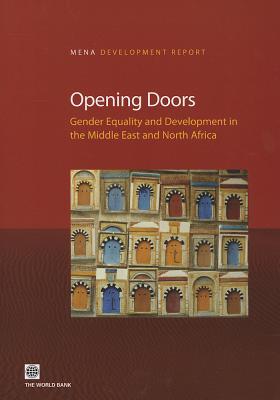
In the last two decades, the Middle East and North Africa (MENA) region has closed many critical gender gaps, especially in ensuring equal access for girls and boys to education and healthcare. Today, the region can be proud that its women are enrolling in far greater numbers in university than ever before, and indeed, in many countries, young women are more educated than young men. At the same time, MENA has also witnessed the largest decrease in maternal mortality in the world. These achievements are commendable, and the next step is expanding the role of MENA women in the work place and in public life. Currently, only one in four women of working age are employed or looking for work. Many of them find it very difficult to get a job. Young women in many MENA countries face unemployment rates as high as 50 percent. It is no surprise then, that the region's young, educated women are calling for greater access to economic opportunities, and a more equal, inclusive society. These unmet aspirations and the vast untapped potential of half of the region's people, at a time when the region is undergoing a momentous transformation is the context of this report. The analysis in the report makes a compelling case for concerted and coordinated action on multiple fronts to realize these aspirations and harness the potential of MENA's women. In the region, women face a complex set of constraints to decision-making, choice, mobility and opportunity. Legal barriers, gender norms, lack of market relevant skills, limited opportunities in the private sector, to name a few. The report offers suggestions for policy action to address these myriad challenges. As the region looks to a new future and a new development path, we hope that this report will provide an analytical platform for debate and dialogue and a renewed commitment to gender equality.
Log in to write a review for this book.
No reviews yet. Be the first to share your opinion.
Biography not available.