Lakeland, Paul Author
Biography not available.

Browse all FOLKLORE books
Browse all GARDENS books
Browse all GRAPHIC NOVELS books
Browse all HISTORY - MEDIEVAL books
Browse all HUMOUR books
Browse all Juvenile Fiction : Biographical - Other books
Browse all Juvenile Fiction : Historical - Other books
Browse all Juvenile Fiction : Legends, Myths, & Fables - Other books
Browse all Juvenile Fiction : People & Places - Other books
Browse all Juvenile Fiction : People & Places - United States - Other books
Browse all Juvenile Fiction : Religious - Other books
Browse all Juvenile Nonfiction : History - Other books
Browse all Juvenile Nonfiction : Mathematics - Advanced books
Browse all Juvenile Nonfiction : People & Places - Other books
Browse all Juvenile Nonfiction : People & Places - United States - Othe books
Browse all LITERARY STUDIES books
Browse all LONDON books
Browse all Medical : Nursing - Mental Health books
Browse all MIND books
Browse all MUSEOLOGY books
Browse all NON-CLASSIFIABLE books
Browse all NONLINEAR SCIENCE books
Browse all POPULAR SCIENCE books
Browse all RELIGIOUS STUDIES books
Browse all SPIRIT books
Browse all SPORT books
Browse all TRAVEL WRITING books
 Out of Stock
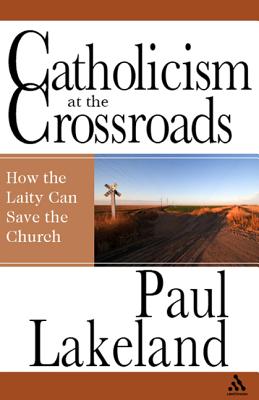
CATHOLICISM AT THE CR
Paperback · ISBN 9780826428103
Inclusive of GST and other taxes
Arriving at your doorstep in 10-15 days
Our logisitcs team will make sure everyitem is delivered safely
| ISBN | 9780826428103 |
|---|---|
| Subtitle | CATHOLICISM AT THE CR |
| Publisher | Bloomsbury 3PL |
| Publication date | April 2007 |
| Language | English |
| MRP | £26.99 GBP |
| Page count | 178 |
| Item weight | 47 g |
Try to define a layperson without using the word not: cannot preach or say mass, is not a priest, is not in a position of leadership in the church. This generally negative or passive understanding of the laity was epitomized in a statement of Pope Pius X: "The one duty of the multitude [i.e., the laity] is to allow themselves to be led and, like a docile fl ock, to follow the Pastors." The Second Vatican Council, with its emphasis on the priesthood of all believers rooted in baptism, changed all that. Yet, writes Paul Lakeland, "many of our bishops and not a few of the lay members of the church are attracted to a dangerously incomplete vision of Catholicism...one that sidesteps the major themes and key insights of Vatican II." In Catholicism at the Crossroads, he teases out themes fi rst developed in a much more formal way in his prize-winning The Liberation of the Laity. In his new book he is "talking to ordinary Catholics in language that requires no special expertise in theology and does not necessitate constant reference to a dictionary."
Baptism, says Lakeland, not priestly ordination, is the basis for all mission and ministry, and the mission of those baptized into Christ is to be the sacrament of God's love in a world rife with violence and brutal inequity. The specifi c mission of the laity is to the world, whereas the mission of the clergy is to the household of the faith. Yet lay people can't leave "church business" exclusively to the clergy, and the clergy can't leave the church's "worldly mission" exclusively to the laity. The key to resolving these overlapping responsibilities is by becoming an adult church, an open church in an open society. In pursuing this goal, Lakeland develops "ten steps toward a more adult church."
Log in to write a review for this book.
No reviews yet. Be the first to share your opinion.
Biography not available.