Eysenck, Michael W. Author
Biography not available.

Browse all FOLKLORE books
Browse all GARDENS books
Browse all GRAPHIC NOVELS books
Browse all HISTORY - MEDIEVAL books
Browse all HUMOUR books
Browse all Juvenile Fiction : Biographical - Other books
Browse all Juvenile Fiction : Historical - Other books
Browse all Juvenile Fiction : Legends, Myths, & Fables - Other books
Browse all Juvenile Fiction : People & Places - Other books
Browse all Juvenile Fiction : People & Places - United States - Other books
Browse all Juvenile Fiction : Religious - Other books
Browse all Juvenile Nonfiction : History - Other books
Browse all Juvenile Nonfiction : Mathematics - Advanced books
Browse all Juvenile Nonfiction : People & Places - Other books
Browse all Juvenile Nonfiction : People & Places - United States - Othe books
Browse all LITERARY STUDIES books
Browse all LONDON books
Browse all Medical : Nursing - Mental Health books
Browse all MIND books
Browse all MUSEOLOGY books
Browse all NON-CLASSIFIABLE books
Browse all NONLINEAR SCIENCE books
Browse all POPULAR SCIENCE books
Browse all RELIGIOUS STUDIES books
Browse all SPIRIT books
Browse all SPORT books
Browse all TRAVEL WRITING books
 Out of Stock
Hardback · ISBN 9780863770715
Inclusive of GST and other taxes
Arriving at your doorstep in 10-15 days
Our logisitcs team will make sure everyitem is delivered safely
| ISBN | 9780863770715 |
|---|---|
| Publisher | Psychology Press |
| Publication date | June 1992 |
| Language | English |
| MRP | £210.00 GBP |
| Page count | 208 |
| Item weight | 99 g |
Correction notice: In chapter 4, on pages 70-71, Christos Halkiopoulos should have been credited for his role in the design and execution of the experiment discussed in Eysenck, M. W. (1991 a). Trait anxiety and cognition. In C. D. Spielberger, I. G. Sarason, Z. Kulczar, and J. Van Heck (Eds.), Stress and Emotion, Vol. 14. London: Hemisphere.
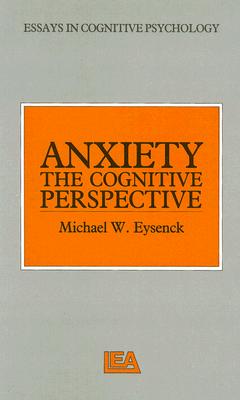
Theorists are increasingly arguing that it is fruitful to approach anxiety from the cognitive perspective, and the empirical evidence supports that contention. The cognitive perspective is also adopted in this book, but the approach represents a development and extension of earlier ones. For example, most previous theories and research have been based on anxiety either in clinical or in normal groups. In contrast, one of the central themes of this book is that there are great advantages to be gained from a joint consideration of clinical and normal anxiety.
Another theme of this book is that it is of major importance to establish whether or not there is a cognitive vulnerability factor which is associated with at least some forms of clinical anxiety. It is argued (with supporting evidence) that there is a latent cognitive vulnerability factor for generalized anxiety disorder which manifests itself under stressful conditions. This vulnerability factor is characterized by hypervigilance, and is found predominantly in normals high in the personality dimension of trait anxiety.
The scope of the book extends to the effects of anxiety on performance and to the phenomenon of worry, which is regarded as the cognitive component of anxiety. In both cases, a new theoretical framework is presented.
Log in to write a review for this book.
No reviews yet. Be the first to share your opinion.
Biography not available.