McKeon, Ed Author
Biography not available.

Browse all FOLKLORE books
Browse all GARDENS books
Browse all GRAPHIC NOVELS books
Browse all HISTORY - MEDIEVAL books
Browse all HUMOUR books
Browse all Juvenile Fiction : Biographical - Other books
Browse all Juvenile Fiction : Historical - Other books
Browse all Juvenile Fiction : Legends, Myths, & Fables - Other books
Browse all Juvenile Fiction : People & Places - Other books
Browse all Juvenile Fiction : People & Places - United States - Other books
Browse all Juvenile Fiction : Religious - Other books
Browse all Juvenile Nonfiction : History - Other books
Browse all Juvenile Nonfiction : Mathematics - Advanced books
Browse all Juvenile Nonfiction : People & Places - Other books
Browse all Juvenile Nonfiction : People & Places - United States - Othe books
Browse all LITERARY STUDIES books
Browse all LONDON books
Browse all Medical : Nursing - Mental Health books
Browse all MIND books
Browse all MUSEOLOGY books
Browse all NON-CLASSIFIABLE books
Browse all NONLINEAR SCIENCE books
Browse all POPULAR SCIENCE books
Browse all RELIGIOUS STUDIES books
Browse all SPIRIT books
Browse all SPORT books
Browse all TRAVEL WRITING books
 Out of Stock
Paperback · ISBN 9781009337601
Inclusive of GST and other taxes
Arriving at your doorstep in 10-15 days
Our logisitcs team will make sure everyitem is delivered safely
| ISBN | 9781009337601 |
|---|---|
| Publisher | Cambridge University Press |
| Publication date | November 2022 |
| Language | English |
| MRP | £18.00 GBP |
| Page count | 86 |
| Item weight | 28 g |
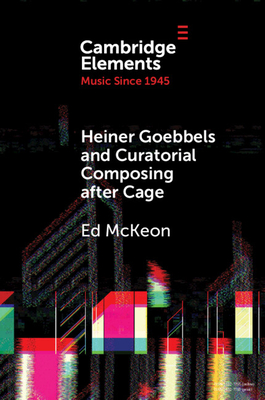
This Element introduces the notion of curatorial composing to account for certain musical practices that emerged from the 1960s as the founding concepts of music as an art - instituted in the modern era - were systematically dismantled. It raises the key question of how musical value and authority might be produced without recourse to an external principle, origin, transcendental framework, or other foundation. It argues that these practices do not dismiss the issue of value or simply relativise it but shift the paradigm to a curatorial concern for composing public encounters and staging events. The Element shows that Lydia Goehr's elaboration of the work-concept provides a framework that was transformed by John Cage in his work from 0'00" (1962) onwards. The Element then introduces Heiner Goebbels' practice and focus on his role as Artistic Director of the Ruhrtriennale (2012-14), which it argues was an extension of his curatorial composing.
Log in to write a review for this book.
No reviews yet. Be the first to share your opinion.
Biography not available.