Xu, Hao Author
Biography not available.

Browse all FOLKLORE books
Browse all GARDENS books
Browse all GRAPHIC NOVELS books
Browse all HISTORY - MEDIEVAL books
Browse all HUMOUR books
Browse all Juvenile Fiction : Biographical - Other books
Browse all Juvenile Fiction : Historical - Other books
Browse all Juvenile Fiction : Legends, Myths, & Fables - Other books
Browse all Juvenile Fiction : People & Places - Other books
Browse all Juvenile Fiction : People & Places - United States - Other books
Browse all Juvenile Fiction : Religious - Other books
Browse all Juvenile Nonfiction : History - Other books
Browse all Juvenile Nonfiction : Mathematics - Advanced books
Browse all Juvenile Nonfiction : People & Places - Other books
Browse all Juvenile Nonfiction : People & Places - United States - Othe books
Browse all LITERARY STUDIES books
Browse all LONDON books
Browse all Medical : Nursing - Mental Health books
Browse all MIND books
Browse all MUSEOLOGY books
Browse all NON-CLASSIFIABLE books
Browse all NONLINEAR SCIENCE books
Browse all POPULAR SCIENCE books
Browse all RELIGIOUS STUDIES books
Browse all SPIRIT books
Browse all SPORT books
Browse all TRAVEL WRITING books
 Out of Stock
Paperback · ISBN 9781009377713
Inclusive of GST and other taxes
Arriving at your doorstep in 10-15 days
Our logisitcs team will make sure everyitem is delivered safely
| ISBN | 9781009377713 |
|---|---|
| Publisher | Cambridge University Press |
| Publication date | June 2024 |
| Language | English |
| MRP | £18.00 GBP |
| Page count | 78 |
| Item weight | 26 g |
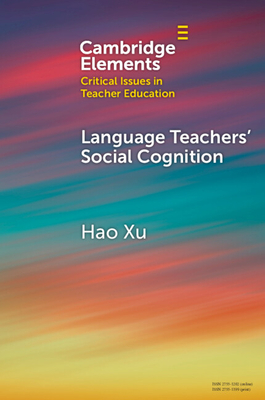
This Element aims to elucidate the theories of social cognition and to delineate their implications for the professional development of language teachers in primary and secondary schools. We first explore the concept of social cognition. The three key dimensions, that is, representation of social reality, social cognitive processing, and social mental abilities, of the social cognition theories are further elaborated with examples closely associated with language teaching and teacher development. We continue with more specific issues such as impression, attitude, emotion, and self-efficacy, which arise and develop as language teachers code, store, and retrieve information from social situations. We then discuss how social cognition influences teacher learning and development as observed and promoted within different social realities, and we end this Element with a call for a social-cognitive perspective on understanding language teachers' learning and development situated in diverse and changing contexts in and out of schools.
Log in to write a review for this book.
No reviews yet. Be the first to share your opinion.
Biography not available.