Kaufmann, Angelica Author
Biography not available.

Browse all 112026 books
Browse all 92026 books
Browse all ART CRITICISM books
Browse all Ashworth books
Browse all FOLKLORE books
Browse all GARDENS books
Browse all GRAPHIC NOVELS books
Browse all Hamilton books
Browse all HISTORY - MEDIEVAL books
Browse all HUMOUR books
Browse all Juvenile Fiction : Biographical - Other books
Browse all Juvenile Fiction : Historical - Other books
Browse all Juvenile Fiction : Legends, Myths, & Fables - Other books
Browse all Juvenile Fiction : People & Places - Other books
Browse all Juvenile Fiction : People & Places - United States - Other books
Browse all Juvenile Fiction : Religious - Other books
Browse all Juvenile Nonfiction : History - Other books
Browse all Juvenile Nonfiction : Mathematics - Advanced books
Browse all Juvenile Nonfiction : People & Places - Other books
Browse all Juvenile Nonfiction : People & Places - United States - Othe books
Browse all KINDRED books
Browse all LITERARY STUDIES books
Browse all LONDON books
Browse all Lozada books
Browse all Medical : Nursing - Mental Health books
Browse all MIND books
Browse all MUSEOLOGY books
Browse all NON-CLASSIFIABLE books
Browse all NONLINEAR SCIENCE books
Browse all Ormonde books
Browse all POPULAR SCIENCE books
Browse all RELIGIOUS STUDIES books
Browse all SPIRIT books
Browse all SPORT books
Browse all TRAVEL WRITING books
 Out of Stock
Hardback · ISBN 9781009647854
Inclusive of GST and other taxes
Arriving at your doorstep in 10-15 days
Our logisitcs team will make sure everyitem is delivered safely
| ISBN | 9781009647854 |
|---|---|
| Publisher | Cambridge University Press |
| Publication date | March 2026 |
| Language | English |
| MRP | £55.00 GBP |
| Page count | 98 |
| Item weight | 67 g |
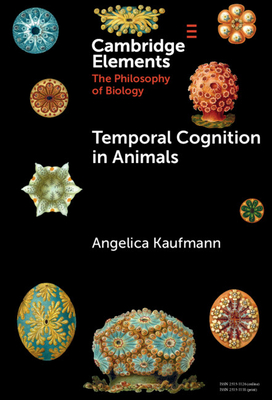
Humans and non-human animals alike rely on temporal cues to coordinate behaviour. This Element investigates whether non-human animals possess genuine temporal cognition- the capacity to mentally represent time rather than merely respond to temporal cues. It examines the evolution of cognitive architectures that support temporal coordination and considers the philosophical implications of time representation. Challenging the long-standing view that non-human animals operate in a 'permanent present' and lack the ability to mentally represent time, the Element offers a comparative analysis across apes, marine mammals, terrestrial mammals, birds, insects, and human infants. Drawing on current empirical evidence, it explores how different species represent time and coordinate action accordingly. By bringing together empirical research and philosophical analysis, the Element addresses a critical gap in the literature and advances the view that temporal cognition is widespread in nature.
Log in to write a review for this book.
No reviews yet. Be the first to share your opinion.
Biography not available.