Meighan, Paul Author
Biography not available.

Browse all FOLKLORE books
Browse all GARDENS books
Browse all GRAPHIC NOVELS books
Browse all HISTORY - MEDIEVAL books
Browse all HUMOUR books
Browse all Juvenile Fiction : Biographical - Other books
Browse all Juvenile Fiction : Historical - Other books
Browse all Juvenile Fiction : Legends, Myths, & Fables - Other books
Browse all Juvenile Fiction : People & Places - Other books
Browse all Juvenile Fiction : People & Places - United States - Other books
Browse all Juvenile Fiction : Religious - Other books
Browse all Juvenile Nonfiction : History - Other books
Browse all Juvenile Nonfiction : Mathematics - Advanced books
Browse all Juvenile Nonfiction : People & Places - Other books
Browse all Juvenile Nonfiction : People & Places - United States - Othe books
Browse all LITERARY STUDIES books
Browse all LONDON books
Browse all Medical : Nursing - Mental Health books
Browse all MIND books
Browse all MUSEOLOGY books
Browse all NON-CLASSIFIABLE books
Browse all NONLINEAR SCIENCE books
Browse all POPULAR SCIENCE books
Browse all RELIGIOUS STUDIES books
Browse all SPIRIT books
Browse all SPORT books
Browse all TRAVEL WRITING books
 Out of Stock
Paperback · ISBN 9781009697453
Inclusive of GST and other taxes
Arriving at your doorstep in 10-15 days
Our logisitcs team will make sure everyitem is delivered safely
| ISBN | 9781009697453 |
|---|---|
| Publisher | Cambridge University Press |
| Publication date | July 2026 |
| Language | English |
| MRP | £18.00 GBP |
| Page count | 112 |
| Item weight | 36 g |
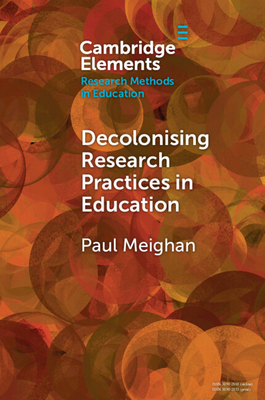
This Element explores kincentric and relational methodologies for decolonising educational research. While Indigenous methodologies emphasise decoloniality, relational accountability, and kinship, mainstream research often neglects these principles. Addressing this gap, it introduces Dùthchas ‒ an Indigenous Gaelic concept of kinship, interconnectedness, and ethical responsibility ‒ as a kincentric, relational methodology. Drawing on research with Anishinaabe and Gaelic community members and broader Indigenous scholarship, the Element interrogates dominant paradigms and reframes data collection, analysis, and dissemination as knowledge gathering, generation, and sharing. It advocates participatory, community-led design and Indigenous-informed analytic approaches, such as Anishinaabe Bizindam (deep listening) and Càirdeas (Gaelic kinship), grounded in researcher positionality and reflexivity. Practical guidance is provided for implementing kincentric and relational methodologies, while respecting Indigenous data sovereignty and cultural protocols. By bridging Indigenous and non-Indigenous traditions, it offers theoretical insights and a framework for decolonising research practices.
Log in to write a review for this book.
No reviews yet. Be the first to share your opinion.
Biography not available.